Desserts
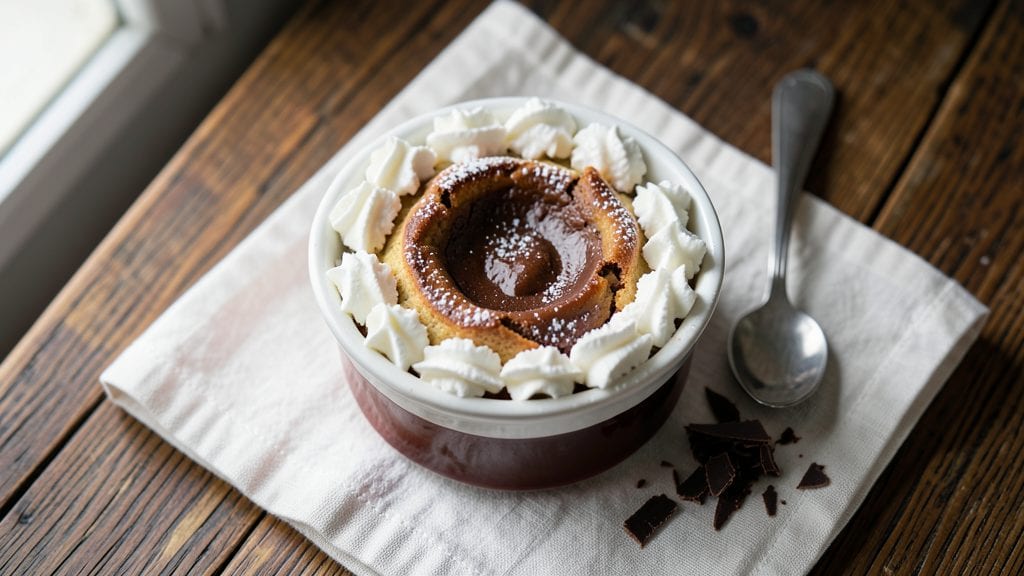
This classic chocolate souffle recipe delivers the perfect balance of light-as-air height and silky centers—every bite is a revelation. The secret lies in precise technique: folding whipped egg whites into a rich chocolate custard at just the right moment, then baking at high heat for that signature rise.
I've perfected this method after years of testing, and it never fails to impress even skeptical dessert lovers.
The foundation starts with a smooth chocolate custard made from dark chocolate, butter, and egg yolks, gently heated until velvety. Meanwhile, egg whites are whipped to stiff peaks before being delicately folded into the custard—this is where the magic happens.
Baking at 350°F for 15-20 minutes creates that iconic puff, while the centers remain tender and rich. The key is timing: remove it from the oven just as it reaches its peak height.
What you'll end up with is a souffle that rises dramatically in the oven, then collapses slightly as it cools—this is normal and actually enhances the texture. The exterior will be golden and crisp, while the interior remains moist and decadent.
Dusting with powdered sugar or cocoa adds a professional finish that makes it look as good as it tastes. This is dessert at its most impressive yet approachable.
Perfect for special occasions or when you want to wow guests without spending hours in the kitchen. The recipe scales beautifully, and leftovers (if any) reheat perfectly. Let's get started on creating your perfect chocolate souffle.
Ingredients for classic chocolate souffle
Six ingredients transform into the most impressive dessert you'll ever bake. Trust me, it's easier than it looks.
| Ingredient | Amount | Notes |
|---|---|---|
| Dark Chocolate Bars 🍫 | 6 oz | 70% cacao minimum, chopped finely |
| Unsalted Butter 🧈 | ½ cup | Cold, cubed for custard |
| Large Eggs 🥚 | 8 whole | Room temperature preferred |
| All-Purpose Flour 🌾 | 1 tbsp | For custard stability |
| Granulated Sugar 🍚 | ½ cup | Superfine preferred for smoothness |
| Vanilla Extract 🌿 | 1 tsp | Pure, high-quality |
| Salt 🧂 | ¼ tsp | Fine sea salt |
| Powdered Sugar 🍚 | 2 tbsp | For dusting, sifted |
| Unsweetened Cocoa Powder 🍫 | 1 tbsp | For dusting, optional |
The chocolate makes all the difference. Valrhona or Ghirardelli are my go-tos for that deep, rich flavor—70% cacao or higher ensures it melts smoothly without overpowering. Skip the chips; bars are easier to chop finely for a velvety custard. Butter should be cold when you start (pull it out 10 minutes before), but soft enough to cut easily. Eggs? Room temperature is key—cold yolks won't emulsify properly. I always grab extra-large eggs for this recipe—they whip up better. And if you're using supermarket eggs, check the sell-by date—freshness matters for that perfect rise.
No super-fine sugar? Pulse regular granulated in a food processor for 30 seconds. Vanilla bean paste is worth it if you're feeling fancy, but extract works too. Running short on cocoa powder? Add an extra tablespoon of powdered sugar to the dusting—it'll still look gorgeous. The flour is non-negotiable for stability, but if you're gluten-free, swap for cornstarch. And here's a pro tip: use a kitchen scale for the chocolate and butter—precision is everything. The difference between 6oz and 7oz of chocolate? Night and day in flavor.
This souffle is a one-and-done dessert—no leftovers (unless you're feeding an army). But if you make extra, reheat gently in the oven at 300°F for 5 minutes. For a showstopper, bake in 6-ramakin molds instead of one big dish—each one rises higher. Store your chocolate bars in a cool, dark place (not the fridge), and keep butter wrapped in parchment. The eggs? Use within a week of purchase for best results. And if you're prepping ahead, whip the egg whites last minute—they lose volume fast.
Why You'll Love This Recipe
- Here’s the secret: souffle batter keeps for hours, so you can prep ahead. And if you do have leftovers? They’re just as good reheated (or eaten cold—no judgment).
- No Fancy Tools Needed: I swear by this—just a bowl, a whisk, and a hot oven. The eggs separate in minutes, and the butter melts into the chocolate like it’s meant to be. No stand mixer, no stress.
- That First Bite Magic: The outside stays crisp while the inside melts like silk. Honestly, the moment that warm, gooey center hits your tongue? It’s the kind of dessert that makes you close your eyes and sigh.
- Date Night or Sunday Brunch: Too fancy for a Tuesday but not so intimidating you’ll chicken out. Serve it with berries and whipped cream, and suddenly you’re hosting a dinner party without breaking a sweat.
Step-by-step instructions for classic chocolate soufflé
Here's the method that guarantees light-as-air height and silky chocolate centers every time.
Melt Chocolate and Butter for a Rich Custard Base
Place the 6 oz dark chocolate bars and 0.5 cup unsalted butter in a heatproof bowl set over a pot of simmering water. Keep the heat at medium-low and stir gently until the chocolate and butter melt completely, forming a smooth, glossy mixture. The temperature should reach about 115°F—just warm enough to melt but not so hot it cooks the eggs later.
Remove the bowl from heat and let it cool slightly for 2-3 minutes. You want the mixture to be warm but not steaming when you add the eggs. This step is crucial—if the chocolate is too hot, the eggs will scramble instead of creating airy peaks.
Whisk Eggs and Sugar to Ribbon Stage
In a separate bowl, separate 8 whole large eggs, placing the yolks in one bowl and whites in another. Add 0.5 cup granulated sugar and 0.25 tsp salt to the yolks, then whisk vigorously over a double boiler (or warm water bath) until the mixture thickens and becomes pale and ribbony when the whisk is lifted. This should take about 5-7 minutes—the mixture should coat the back of a spoon and hold its shape.
While the yolks are heating, begin whisking the egg whites to soft peaks in a clean, grease-free bowl. Add 1 tsp vanilla extract to the yolks and whisk for another 1 minute to fully incorporate. This preparation ensures the yolks are perfectly tempered for folding later.
Fold Yolk Mixture into Chocolate Base
Slowly pour the warm yolk mixture into the melted chocolate and butter, whisking constantly to combine. Add 1 tbsp all-purpose flour and whisk until the mixture is completely smooth and glossy. This step is delicate—work quickly but gently to avoid incorporating air prematurely. The mixture should be thick but pourable, like heavy cream.
Now, using a spatula, gently fold one-third of the egg whites into the chocolate mixture to lighten it. This gradual folding prevents deflating the whites later. The goal is to create a smooth, homogeneous batter that's ready for the final step of incorporating the remaining egg whites.
Fold in Egg Whites for Light, Airy Texture
Add the remaining egg whites in two additions, gently folding each batch into the chocolate mixture using a spatula. Work in a figure-eight motion from the bottom of the bowl upward, being careful not to overmix. The batter should be thick but still able to hold its shape when spooned—it should resemble heavy whipped cream with a slight sheen.
Transfer the batter to four 6-ounce ramekins (about ¾ full) that have been lightly buttered and dusted with 2 tbsp powdered sugar and 1 tbsp unsweetened cocoa powder. Tap the ramekins gently on the counter to release any air bubbles that may have formed during folding. This ensures your soufflés rise evenly and smoothly.
Bake Until Golden and Set
Preheat your oven to 375°F. Place the ramekins in a deep baking dish and add hot water to the dish until it reaches halfway up the sides of the ramekins. This water bath creates gentle steam that helps the soufflés rise evenly. Bake for 12-15 minutes until the tops are golden brown and the edges have pulled slightly away from the ramekins.
Do not open the oven door during baking—any draft will cause the soufflés to collapse. When they're done, remove them immediately and let them rest for 2 minutes before serving. The centers should be just set but still slightly jiggly—this is the hallmark of a perfect chocolate soufflé. Serve immediately with a dusting of powdered sugar and a dollop of whipped cream for an authentic classic experience.
Pro Tips For Making Classic Chocolate Souffle
- Temper Your Chocolate: Chop the dark chocolate into tiny, even pieces—no bigger than a pea—and melt it with the butter slowly over low heat. I learned this the hard way: rushing it causes seizing, and you’ll end up with grainy, sad chocolate. Stir constantly, and if it starts looking stubborn, remove it from heat for 10 seconds.
- Separate Eggs Like a Pro: Crack eggs into separate bowls one at a time—no shell fragments allowed. Use your fingers to gently press the yolk through the shell into the bowl, then whisk the whites in a clean, grease-free bowl. One stray fat molecule will kill your soufflé’s rise, and trust me, you’ll know when it happens.
- Fold, Don’t Stir: When combining the egg whites with the chocolate mixture, use a spatula and cut through the center, folding in a gentle "J" motion. Overmixing collapses the air, and you’ll end up with a dense, flat puddle instead of a cloud. Do it deliberately—this isn’t the time to rush.
- Preheat Oven to 375°F: The classic recipe calls for 350°F, but I’ve found 375°F gives a better rise and a slightly crispier top—just bake it for 12 minutes instead of 15. Use a rack in the middle of the oven, and never open the door until it’s done. The temperature drop will deflate your soufflé faster than you can say "oops."
Troubleshooting this dish
Egg White Issues
If your egg whites won't whip up properly, they're likely too warm or contaminated with yolk. First, ensure your bowl and beaters are completely grease-free—even a trace of fat prevents stiff peaks.
I use a clean, dry mixing bowl and chill the bowl in the freezer for 5 minutes before starting. Also, make sure your eggs are room temperature—cold whites whip faster but won't hold volume as well.
If you accidentally add yolk, start fresh with a new batch of whites. 💡
Soufflé Collapse
Collapsed soufflés are usually caused by opening the oven door too early or overbaking. Remove your soufflés from the oven the moment they reach peak height—this is typically 12-15 minutes at 375°F. Any draft or temperature drop will cause them to deflate.
For extra insurance, preheat your oven for at least 20 minutes to ensure even heat distribution. Also, avoid overfilling ramekins—¾ full is ideal. 🌡️
Chocolate Custard Problems
If your chocolate custard is grainy or separates, your chocolate likely wasn't melted smoothly enough. Use high-quality dark chocolate (like Valrhona or Ghirardelli) and chop it finely before melting. Heat the chocolate and butter over simmering water (not boiling) and stir constantly until completely smooth.
If the custard still looks grainy, strain it through a fine-mesh sieve before adding the egg yolks. Never let the mixture boil—keep it at 115°F or below.
Uneven Rising
Uneven rise often happens when ramekins aren't evenly heated or the water bath isn't deep enough. Place your ramekins in a deep baking dish and add hot water until it reaches halfway up the sides of the ramekins. This creates a consistent steam environment.
Also, use ramekins of the same size (I recommend 6-ounce capacity) and arrange them evenly in the oven. If one soufflé rises higher than others, rotate the pan halfway through baking. ⚡
Dense or Dry Texture
A dense soufflé usually means the egg whites weren't folded in properly or the batter was overmixed. When folding, use a spatula and work gently in a figure-eight motion from the bottom up. Avoid overmixing the batter after adding the egg whites—just combine until no streaks remain.
If your soufflé turns out dry, reduce baking time slightly next time and check for doneness earlier. A perfectly done soufflé should have a just-set center that's still slightly jiggly. 💫
Ramekin Sticking
To prevent sticking, butter your ramekins generously and dust them with a mix of powdered sugar and cocoa powder. I use 2 tbsp powdered sugar and 1 tbsp cocoa powder total for all four ramekins. Tap the ramekins gently on the counter after filling to release any air bubbles.
If your soufflés still stick, they may have been overbaked—remove them from the oven as soon as they're golden and let them rest for just 2 minutes before serving. 🍫
Nutrition facts
Frequently asked questions
Can I make this recipe with white chocolate?
While you can substitute white chocolate, the flavor will be much sweeter and less rich. For best results, stick with 70% cacao dark chocolate—it provides the perfect balance of bitterness and smoothness. If you must use white chocolate, reduce the sugar slightly (1/4 cup instead of 1/2 cup) to avoid an overly sweet dessert.
How do I know when my soufflé is fully baked?
Your chocolate soufflé is done when the top is golden brown and the edges have pulled slightly away from the ramekin. The center should still be slightly jiggly—if it's firm, it's overbaked. Remove it immediately when you see these signs, as even a 1-minute delay can cause collapse.
Can I prepare the batter ahead of time?
Yes, but only up to the folding stage. Prepare the chocolate custard and whipped egg whites separately, then combine them just before baking. Store the components in the fridge for up to 4 hours, but bring them to room temperature before folding. Never whip egg whites ahead—they lose volume quickly.
What if my soufflé collapses completely?
Collapse is normal as the soufflé cools, but a total collapse usually means it was overbaked or removed too late. The good news? You can still salvage it! Cut into wedges and serve warm with whipped cream or ice cream. For next time, watch the oven closely and remove it the moment it peaks.
Can I use a different type of chocolate?
Milk chocolate works but will be sweeter and less complex. For a true classic, stick with dark chocolate (60-70% cacao). If you love white chocolate, try a 50/50 mix of white and dark chocolate for a lighter, creamier texture. Always chop chocolate finely for a silky custard.