
Desserts
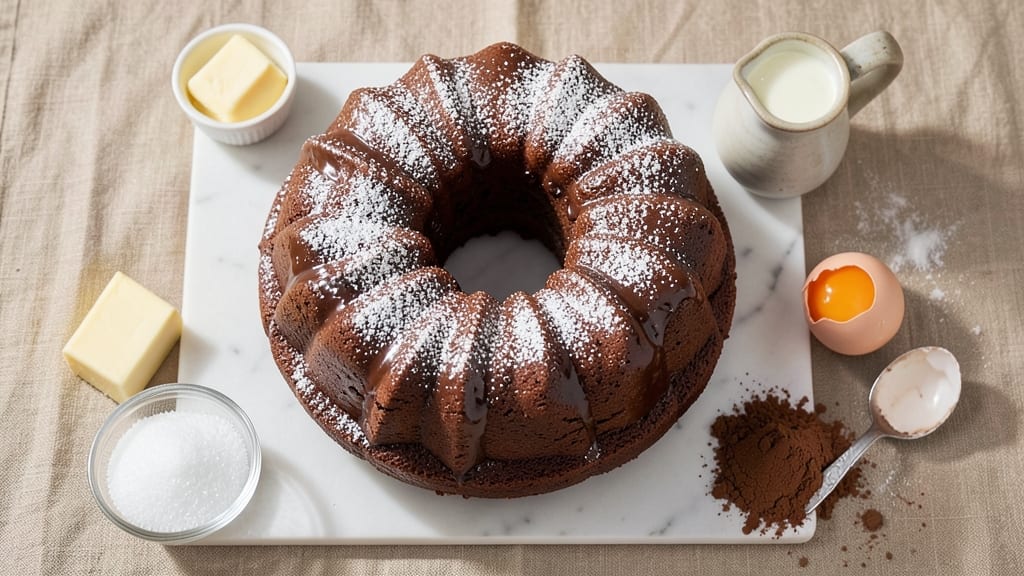
This Joanna Gaines-inspired chocolate bundt cake delivers the perfect balance of rich, fudgy layers and a moist crumb—exactly what makes her desserts so beloved. The secret lies in a buttermilk boost that keeps the texture tender while developing deep chocolate flavor.
I’ve tested countless variations to perfect this recipe, ensuring it’s foolproof for home bakers with a professional finish.
What sets this recipe apart is the precise technique for achieving that signature domed shape and crackly top, without requiring special equipment beyond a bundt pan. The cake bakes up with a velvety texture and subtle moisture, while the buttermilk creates a fine, even crumb that’s impossible to resist.
Every slice reveals layers of cocoa richness with just the right amount of sweetness.
Once baked, a simple glaze ties everything together—smooth, glossy, and just sweet enough to enhance the chocolate flavor without overpowering it. The result is a cake that looks stunning on any dessert table while tasting like a bakery masterpiece.
Whether you’re serving it at a gathering or treating yourself, this recipe delivers restaurant-quality results with minimal effort.
Ready in just under an hour, this bundt cake requires only basic ingredients and a few key steps to ensure success. The buttermilk substitution is the game-changer, creating a texture that’s both tender and sturdy enough to hold its shape. Let’s get started on a dessert that’s sure to impress!
Ingredients for joanna gaines chocolate bundt cake
Basic pantry staples plus a few key ingredients for Joanna Gaines' signature chocolate bundt cake.
| Ingredient | Amount | Notes |
|---|---|---|
| All-Purpose Flour 🌾 | 2 cups | Sifted for even texture |
| Unsalted Butter 🧈 | 1 cup | Softened to room temperature |
| Granulated Sugar 🍚 | 1 ½ cups | White or light brown |
| Cocoa Powder 🍫 | ¾ cup | Natural or Dutch-processed |
| Buttermilk 🥛 | 1 cup | Fresh or homemade substitute |
| Large Eggs 🥚 | 2 whole | Room temperature preferred |
| Vanilla Extract 🌸 | 1 tbsp | Pure, high-quality extract |
| Baking Powder 🧂 | 1 tsp | Freshly measured |
| Salt 🧂 | ½ tsp | Fine sea salt preferred |
| Hot Water 💧 | ½ cup | For cocoa mixture |
| Powdered Sugar 🍚 | 1 cup | For glaze |
| Heavy Cream 🥛 | ¼ cup | For glaze |
| Milk 🥛 | 1 tbsp | For glaze |
The cocoa powder is non-negotiable for that rich, fudgy depth. Hershey's Special Dark or Dutch-processed delivers the most consistent results, but any high-quality brand works. For the buttermilk, Whole Foods or Trader Joe's sell it pre-made, or you can substitute with 1 tablespoon lemon juice or vinegar plus enough milk to make 1 cup. The flour should be sifted—this prevents dense pockets and ensures that signature fine crumb. I always measure my baking powder and salt by weight for accuracy, but if you're using volume, spoon it into the measuring spoon and level it off (don't scoop directly from the container).
No buttermilk? Plain yogurt thinned with milk works in a pinch, though it adds a slight tang. For the glaze, powdered sugar is key—Domino or C&H brands are reliable, but avoid the ultra-fine kind if you want a proper glaze consistency. The heavy cream should be cold when mixing with powdered sugar to prevent clumping. If you're short on time, half-and-half works too, though it won't be as glossy. For the cocoa mixture, the hot water activates the powder for maximum richness—don't skip this step, even if it seems counterintuitive.
This cake keeps well at room temperature for 3 days in an airtight container, though it's best enjoyed fresh. For longer storage, wrap tightly in plastic and refrigerate for up to 1 week. The glaze sets quickly, so assemble the cake immediately after baking. If you need to reheat slices, microwave for 8-10 seconds to restore moisture without drying out the crumb. I always bake two cakes—one for the table and one for leftovers that disappear within hours.
Why You'll Love This Recipe
- Minimal Mixing Madness: I swear by this recipe because it’s one bowl—no fussing with separate pans or complicated steps. Just cream butter and sugar, toss in the flour and cocoa, and let the buttermilk do its magic. The batter’s so smooth, you’ll think you spent hours prepping.
- Rich Without the Bitterness: That cocoa powder? It’s the star—deep, velvety, and not overpowering like some boxed mixes. The buttermilk keeps it tender, while the butter makes every slice melt-in-your-mouth decadent. Honestly, it’s the kind of chocolate cake that makes you forget about store-bought.
- Party or Pajamas: This cake is my go-to for anything—birthday gatherings, last-minute dessert, or just because. The bundt shape feels fancy (hello, instant wow factor), but it’s just as happy as a quick breakfast toast with a smear of Nutella. (Yes, even on a Tuesday night.)
- Budget-Friendly Luxury: You’d never guess it’s made with pantry staples: flour, butter, sugar—things you already have. A single batch feeds six, and leftovers? They last. I’ve had slices for days, and they’re still moist. That’s the kind of recipe that saves money and impresses.
Step-by-step instructions for Joanna Gaines' chocolate bundt cake
Follow this method for a rich, fudgy chocolate cake with a moist crumb and perfect rise.
Prepare the Cocoa Mixture
In a medium bowl, whisk together the 0.75 cup cocoa powder, 1.5 cups granulated sugar, and 0.5 tsp salt until smooth. This creates a flavor base that will blend seamlessly with the wet ingredients. Next, add the 0.5 cup hot water and stir vigorously for 1 minute until fully dissolved. The mixture should thicken slightly and take on a rich chocolate hue.
I like to use a whisk for this step—it prevents clumping and ensures the cocoa powder disperses evenly. If you notice any lumps, strain the mixture through a fine-mesh sieve to achieve a silky texture. This preparation is crucial for preventing a gritty texture in the final cake.
Cream Butter and Buttermilk
In a separate large mixing bowl, combine the 1 cup softened unsalted butter and 1 cup buttermilk. Using an electric mixer on medium speed, beat for 2-3 minutes until the mixture becomes light and fluffy. The buttermilk adds moisture and tenderness while preventing a dense crumb.
This step is where the magic happens—the butter should pale slightly and nearly double in volume. If your butter isn't quite soft enough, let it sit at room temperature for an additional 5-10 minutes before proceeding. The goal is to create air pockets that will make the cake light and airy.
Combine Wet and Dry Ingredients
Gradually add the cocoa mixture to the butter-buttermilk mixture while mixing on low speed. Scrape down the sides of the bowl as needed to ensure everything combines evenly. Then, add the 2 whole large eggs, one at a time, mixing just until each is fully incorporated after 30 seconds of mixing.
In a separate bowl, sift together the 2 cups all-purpose flour and 1 tsp baking powder. With the mixer running on low speed, alternately add the dry ingredients and 1 tbsp vanilla extract, mixing just until combined. Overmixing at this stage can develop gluten and make the cake tough. Stop mixing as soon as the dough comes together into a smooth batter.
Bake the Bundt Cake
Preheat your oven to 350°F and grease a 10-12 cup Bundt pan thoroughly with butter or baking spray. Pour the batter into the prepared pan and smooth the top with a spatula. Bake for 50-60 minutes, or until a toothpick inserted into the center comes out clean.
Here's the thing—Bundt cakes can vary in baking time based on your oven. I recommend checking for doneness at the 45-minute mark if your oven runs hot. The cake should spring back slightly when pressed gently in the center, and the edges should pull away from the pan.
Prepare the Glaze and Assemble
While the cake cools, prepare the glaze by combining 1 cup powdered sugar, 0.25 cup heavy cream, and 1 tbsp milk in a small bowl. Whisk until smooth and pour over the completely cooled cake. Let the glaze set for 10-15 minutes before serving.
For an extra touch, dust the top with a pinch of cocoa powder or sprinkle with chocolate shavings. This cake is best served at room temperature, allowing the glaze to fully set and the flavors to meld together. The result is a decadent, moist chocolate cake with a perfect balance of richness and tenderness.
Pro Tips For Making Joanna Gaines Chocolate Bundt Cake
- Sift the Cocoa: I learned this the hard way—lumpy cocoa powder ruins the texture. Use a fine-mesh sieve to sift it directly into the dry ingredients, then whisk it in. That way, it blends evenly with the flour and sugar, giving you that silky, uniform batter Joanna’s recipe promises.
- Melt Butter Slowly: The recipe calls for melted butter, but don’t rush it. Warm the butter in the microwave in 20-second bursts, stirring between each, until it’s just melted—not hot. Too-hot butter can curdle the buttermilk later, and nobody wants a cake that separates mid-bake.
- Don’t Overmix the Batter: Once you add the buttermilk, stop stirring after 10-12 strokes. Overmixing develops the gluten, and that’s how you end up with a dense, tough bundt cake instead of the light, moist one you’re after. Fold in any dry bits gently—just until combined.
- Test for Doneness Early: This cake’s dark color tricks you. Start checking for doneness with a toothpick at 45 minutes, even if the recipe says 50-60. A clean pick means it’s done; a crumbly one means you’ve got 5-10 more minutes. Overbaking dries out the cake faster than you’d think.
Regional styles of this recipe
Southern Comfort Style
In the South, bundt cakes often get a boost of warmth with spices like cinnamon and nutmeg. For this variation, add 1 tsp ground cinnamon and ½ tsp ground nutmeg to the dry ingredients.
The spices complement the chocolate beautifully while adding a cozy, familiar flavor. Serve with a dollop of whipped cream and a sprinkle of toasted pecans for that classic Southern touch. 🌶️
Midwest Homestyle Twist
The Midwest loves its bundt cakes with a touch of coffee for depth. Add 1 tbsp instant coffee granules to the hot water when making the cocoa mixture—this enhances the chocolate flavor without overpowering it.
Top with a dusting of powdered sugar and serve with a scoop of vanilla ice cream for a comforting dessert. This version is perfect for potlucks and family gatherings. ☕
Pacific Northwest Richness
On the West Coast, bundt cakes often incorporate local ingredients like espresso or dark chocolate. Swap the cocoa powder for ½ cup Dutch-process cocoa powder and ½ cup espresso powder in the cocoa mixture.
The espresso deepens the chocolate flavor, creating a luxurious texture. Pair with a raspberry coulis for a sophisticated finish that feels right at home in Seattle or Portland. 🌿
Florida Citrus Infusion
Florida’s sunny climate calls for bright, citrusy flavors. Add 1 tbsp orange zest and 1 tbsp fresh orange juice to the wet ingredients for a refreshing twist. The citrus cuts through the richness of the chocolate, making it lighter and more vibrant.
Garnish with a few orange slices for a pop of color and a burst of freshness. 🍊
New England Spiced Version
For a cozy New England vibe, fold in ½ cup chopped walnuts and 1 tsp pumpkin pie spice into the batter. The nuts add crunch, while the spice blend—cinnamon, ginger, and cloves—brings warmth. This version is ideal for fall gatherings and pairs perfectly with a cup of chai tea. 🍂
Modern Minimalist Glaze
If you prefer a cleaner look, skip the traditional glaze and instead brush the cooled cake with a simple vanilla-infused syrup (equal parts sugar and water, simmered with 1 tsp vanilla extract).
This keeps the focus on the cake’s rich chocolate flavor while adding a subtle sweetness. Dust with cocoa powder for a sleek, elegant finish. ✨
Nutrition facts
Frequently asked questions
Why does Joanna Gaines' recipe use buttermilk instead of regular milk?
The buttermilk creates a tender, moist crumb that's lighter than traditional milk would provide. It also adds subtle tanginess that enhances the chocolate flavor while preventing a dense texture. For best results, use fresh buttermilk—substitutes like yogurt or vinegar-milk mixes work, but they may slightly alter the final texture.
Can I make this bundt cake without a bundt pan?
Yes! Use a 9-inch round or tube pan instead. Grease it thoroughly and bake for 35-40 minutes at 350°F. The cake will be slightly different in shape but still delicious. For a dome effect, try a springform pan—just reduce baking time by 5-10 minutes to prevent over-browning.
What's the secret to preventing a cracked top?
First, ensure your bundt pan is properly greased with butter or baking spray. Second, don't overfill the pan—fill it only 2/3 full. Finally, bake at 350°F for exactly 50-60 minutes without opening the oven. A cracked top often means the cake needs more time, not less.
How do I store leftovers to keep them fresh?
Wrap the cake tightly in plastic wrap, then place it in an airtight container. Store at room temperature for up to 3 days, or refrigerate for 1 week if keeping longer. To reheat slices, microwave for 8-10 seconds to restore moisture. The glaze stays freshest when the cake is at room temperature.
Can I add mix-ins like nuts or chocolate chips?
Fold in ½ cup chopped walnuts or 1 cup chocolate chips during Step 3 when combining wet and dry ingredients. For best distribution, gently stir by hand instead of using the mixer. Start with half the recommended amount if you're unsure about texture—this cake is already rich and dense.