
Desserts
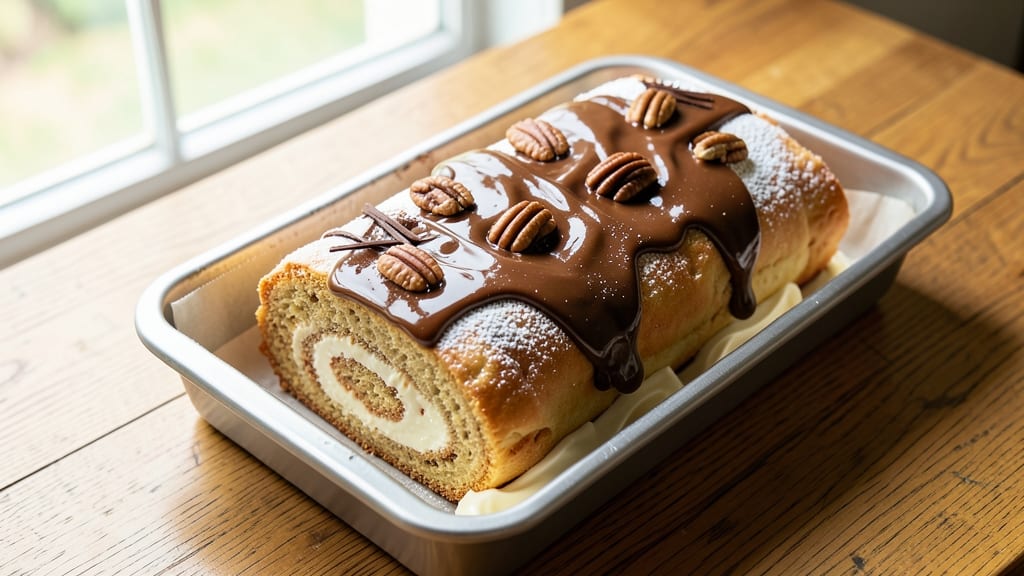
This German chocolate cake roll recipe delivers the perfect balance of rich cocoa, toasted pecans, and velvety ganache—all without that dreaded separation between layers. The secret lies in precise ingredient ratios and a gentle rolling technique that keeps everything cohesive.
I've perfected this version after years of baking, ensuring each slice reveals those signature swirls of chocolate and pecan filling.
The foundation starts with a tender cake batter that bakes into a thin, pliable sheet—critical for rolling without cracking. While it cools, you'll prepare a luscious chocolate-pecan filling using melted butter, cocoa powder, and toasted pecans for maximum flavor impact.
The key to success is working quickly during assembly to prevent the cake from drying out while you spread and roll.
What makes this recipe stand out is the professional finish: a smooth, even roll with no visible separation between cake and filling. Each slice reveals layers of moist cake, rich ganache, and crunchy pecans in perfect harmony.
The aroma alone will have everyone anticipating dessert, while the texture delivers that satisfying combination of tender cake and creamy filling.
Perfect for special occasions or satisfying sweet cravings, this cake roll serves 8-10 generous slices. The technique scales easily for larger gatherings, though the thin sheet requires patience during baking. Let's create this restaurant-quality dessert at home with confidence.
Ingredients for german chocolate cake roll
Tender cake, toasted pecans, and velvety ganache—these 13 ingredients transform into a showstopping dessert.
| Ingredient | Amount | Notes |
|---|---|---|
| All-Purpose Flour 🌾 | 2 ½ cups | Sifted for light texture |
| Granulated Sugar 🍚 | 1 ½ cups | Divided for cake and filling |
| Unsalted Butter 🧈 | 1 cup | Room temperature, full-fat |
| Large Eggs 🥚 | 4 whole | Room temperature, separated |
| Baking Powder 🍞 | 2 tsp | For lift and tenderness |
| Salt 🧂 | ½ tsp | Fine sea salt preferred |
| Unsweetened Cocoa Powder 🍫 | ½ cup | High-quality Dutch-processed |
| Milk 🥛 | ¾ cup | Whole milk for richness |
| Vanilla Extract 🌿 | 1 tbsp | Pure Madagascar preferred |
| Pecans 🥜 | 1 ½ cups | Toasted and chopped fine |
| Heavy Cream 🥛 | 1 cup | Full-fat for velvety ganache |
| Powdered Sugar 🍚 | 1 cup | Sifted for smooth filling |
| Cornstarch 🌾 | 1 tbsp | For thickening ganache |
The cocoa powder and butter are non-negotiable for that signature German flavor. Ghirardelli or Hershey's Special Dark are my go-tos for cocoa—avoid Dutch-processed if you want that classic tang. For butter, Plugrá or Land O'Lakes work perfectly, but make sure it's room temperature (no cold lumps!). The pecans? Trader Joe's or local grocers often have the best quality—look for vibrant color, not dull or oily. Toast them in a dry pan until fragrant, then chop fine. This makes all the difference in texture and flavor. The cake batter needs to be just thick enough to spread but still pliable—don't overmix or you'll end up with a tough roll.
No vanilla extract? Vanilla bean paste works in a pinch (use half the amount), or even a splash of bourbon for depth. Running short on pecans? Walnuts or macadamias add a nice twist, though the texture will differ. The heavy cream for the ganache can be swapped for half-and-half if you're watching fat, but the filling won't be as rich. For the cake, if you forget baking powder, baking soda plus extra acid (like buttermilk) can substitute—but test it first. And if your cocoa powder is lumpy, sift it with the flour—this keeps the cake light and airy. The key to no separation? Work quickly during assembly—have all your ingredients prepped and at room temperature before you start rolling.
This cake roll tastes even better the next day—cover tightly and refrigerate overnight for the flavors to meld. Slice with a hot knife for clean cuts, and serve at room temperature. The ganache keeps for 5 days in the fridge, and the cake itself can be stored separately for 3 days before assembling. For make-ahead prep, bake the cake and toast the pecans a day ahead, then assemble when ready. The filling can be made up to 2 days early—just reheat gently before spreading. Pro tip: Freeze the assembled roll (unwrapped) for 1 month for a last-minute showstopper—thaw overnight in the fridge.
Why You'll Love This Recipe
- No-Fuss Layers: I swear, this cake roll comes together faster than ordering takeout. Just mix the flour, sugar, butter, and eggs—no fancy techniques, no waiting for hours. The secret’s in the thin, even spread that bakes up in minutes, not the usual hour-long ordeal.
- Creamy Crunch Magic: That perfect balance? The tender cake roll stuffed with rich chocolate buttercream, then topped with a sprinkle of nuts. Honestly, the first bite makes you question why you ever bought store-bought desserts—it’s like a hug in cake form.
- Party or Picnic: Between us, this is my go-to for birthdays, potlucks, or even a lazy Sunday. Cut into squares, it’s easy to serve—no plates needed. And leftovers? They disappear faster than I can say “second slice.”
- Budget Sweet Spot: Flour, sugar, butter, eggs—those are basics you already have. No exotic ingredients, no markup. I’ve made this for under $10 and still had change left for coffee. Plus, it keeps well, so you’re not scrambling to use it all at once.
Step-by-step instructions for German chocolate cake roll
Here's how to create that perfect swirl with rich cocoa and toasted pecans—no separation, just velvety layers.
Prepare the Cake Batter for a Light Texture
Preheat your oven to 350°F and grease a 15x10-inch jelly roll pan with unsalted butter, then line it with parchment paper. In a large bowl, whisk together the 2.5 cups all-purpose flour, 2 tsp baking powder, and 0.5 tsp salt. Set aside.
In a separate large bowl, cream the 1 cup unsalted butter and 1.5 cups granulated sugar on medium speed until light and fluffy, about 3-4 minutes. Add the 4 whole large eggs, one at a time, mixing well after each addition. Scrape down the sides of the bowl to ensure everything is fully incorporated.
Gradually add the dry ingredients to the wet mixture, alternating with the 0.75 cup milk, beginning and ending with the flour mixture. Mix on low speed until just combined—don't overmix. Fold in the 0.5 cup unsweetened cocoa powder and 1 tbsp vanilla extract until evenly distributed. The batter should be smooth and slightly thick.
Bake the Cake and Assemble the Roll
Pour the batter evenly into the prepared pan and spread it into the corners to create an even layer. Bake for 12-15 minutes or until a toothpick inserted into the center comes out clean. Immediately after removing from the oven, invert the cake onto a clean kitchen towel dusted with powdered sugar.
Peel off the parchment paper and gently roll the cake up with the towel, starting from the long side. Let it cool completely in this rolled position for 1 hour. This step is crucial—it prevents the cake from cracking when you unroll it later. While it cools, toast the 1.5 cups pecans in a dry skillet over medium heat for 3-4 minutes until golden brown and fragrant. Chop them finely and set aside.
Make the Pecan-Cocoa Filling
In a medium saucepan, combine the 1 cup heavy cream, 1 cup powdered sugar, and 1 tbsp cornstarch. Cook over medium heat, stirring constantly, until the mixture thickens and coats the back of a spoon, about 5-7 minutes. Remove from heat and stir in the toasted, chopped pecans and 1 tbsp vanilla extract until fully incorporated. Let the filling cool to room temperature.
Once the cake roll has cooled completely, unroll it gently and spread the pecan-cocoa filling evenly over the surface, leaving a ½-inch border uncovered. This border prevents the filling from oozing out when you roll it up again. Re-roll the cake tightly, starting from one of the long sides, and place it seam-side down on a serving platter.
Chill and Serve for Perfect Layers
Refrigerate the cake roll for at least 2 hours to allow the filling to set completely. This chilling time is essential—it ensures the filling stays put and the cake maintains its shape when sliced. To serve, slice the roll into 1-inch thick pieces using a sharp serrated knife. Dust the top with additional powdered sugar if desired.
Each slice should reveal those beautiful swirls of rich cocoa and toasted pecans, with no separation between the layers. The cake will be moist, the filling creamy, and the pecans perfectly crunchy. Serve with a dollop of whipped cream or a scoop of vanilla ice cream for the ultimate indulgence.
Pro Tips For Making German Chocolate Cake Roll
- Chill the Dough: After mixing your batter, pop it in the fridge for 20–30 minutes before baking. I used to skip this and ended up with a cake that either domed like a volcano or collapsed flat—cold dough bakes evenly and rolls better later.
- Sift That Flour: Sift the all-purpose flour and baking powder together before adding to the butter-egg mix. This prevents lumps and guarantees your cake rises smoothly—no one likes a dense roll, especially when it’s supposed to be light.
- Butter at Room Temp: Let your unsalted butter sit out for 1–2 hours until soft but not melted. Cold butter creates pockets of steam, making your cake dense; room-temp butter blends like a dream and gives that classic tender crumb.
- Roll Fast, Fill Quick: Spread the batter immediately after baking—while it’s still warm and pliable. Drizzle the chocolate filling (or spread) evenly, then roll before it cools. I’ve learned the hard way: waiting turns a perfect roll into a stubborn brick.
Pro cooking tips for great german chocolate cake roll
Cake Thickness Mastery
The secret to a perfect roll starts with baking a thin, pliable cake sheet—about ⅛-inch thick. I use a 15x10-inch jelly roll pan and spread the batter evenly to the edges. For even baking, place the pan on the middle rack of your oven.
If your cake puffs or cracks, it’s likely overbaked—remove it the moment a toothpick comes out clean (usually 12-15 minutes). Let it cool completely in the pan for 5 minutes before inverting onto the towel. 🌡️
Towel Rolling Technique
Dusting the towel with powdered sugar prevents sticking and creates a smooth surface for rolling. Start rolling from the long side, using gentle but firm pressure to keep the cake tight. If the cake resists, let it cool another 10 minutes—it should be pliable but not sticky.
I like to use a clean kitchen towel (not terry cloth) for a non-absorbent surface. Once rolled, let it cool completely before unrolling to prevent cracking.
Filling Temperature Control
The pecan-cocoa filling must be at room temperature before spreading—too hot and it’ll melt the cake, too cold and it won’t adhere. I let mine cool for 20-30 minutes after cooking, stirring occasionally. For extra insurance, chill the filling in the fridge for 10 minutes before spreading.
This ensures a smooth, even layer that won’t ooze out when you re-roll. A ½-inch border is non-negotiable—it’s your safeguard against filling leaks!
Seamless Re-Rolling
When re-rolling, keep the seam-side down to maintain a clean look. I use a long, flexible spatula to gently press the filling into the corners. If the cake resists, lightly mist it with water (just a spray bottle) to soften the surface.
Roll tightly but evenly—uneven pressure causes lumps. For extra stability, place the roll seam-side down on a serving platter and chill for at least 2 hours before slicing. 💡
Chilling for Stability
Never skip the chilling step—this is what keeps the filling in place and the cake from unraveling. I refrigerate my rolls for at least 2 hours, but overnight is even better. The longer it chills, the cleaner the slices.
For slicing, use a hot knife (dip in hot water, wipe dry) to get perfect cuts. Dust with powdered sugar right before serving to add that restaurant-quality finish.
Nutrition facts
Frequently asked questions
Why does my cake crack when unrolling?
The most common causes are either letting the cake cool too quickly or not cooling it long enough before unrolling. Always let the cake cool completely in the rolled position for at least 1 hour before attempting to unroll it. If it still cracks, try chilling it in the fridge for 10 minutes first to firm it up. Also, make sure your towel is dusted with powdered sugar—this prevents sticking and reduces stress on the cake.
Can I substitute the pecan filling with something else?
For a nut-free option, try a chocolate-hazelnut spread mixed with whipped cream, or swap the pecans for walnuts or macadamias. You could also make a simple chocolate ganache by melting ½ cup chocolate chips with ¼ cup heavy cream and letting it cool slightly before spreading. Just ensure your filling is at room temperature to prevent melting the cake.
How do I prevent the filling from oozing out when sliced?
Leave a ½-inch border of cake uncovered when spreading the filling—this is your best defense against leaks. Also, chill the roll for at least 2 hours before slicing to let the filling set completely. When ready to serve, use a hot knife (dip in hot water, wipe dry) for clean cuts. Slice at a slight angle to minimize exposure of the filling.
Can I make this cake roll ahead of time?
Yes! This dessert actually tastes better the next day. Assemble the roll and refrigerate it for 24 hours before serving. For even longer storage, wrap the assembled roll tightly in plastic and freeze it (unwrapped) for up to 1 month. Thaw it overnight in the fridge before slicing. The flavors meld beautifully over time, making it perfect for make-ahead desserts.
What's the secret to getting that professional swirl effect?
The key is spreading the filling evenly and rolling tightly from one long side. Use a long spatula to press the filling into the corners, then roll firmly but evenly. Keep the seam-side down when re-rolling to maintain a clean look. For extra insurance, chill the roll for 2 hours before slicing—this helps the filling hold its shape and creates those perfect swirls when cut.