Desserts
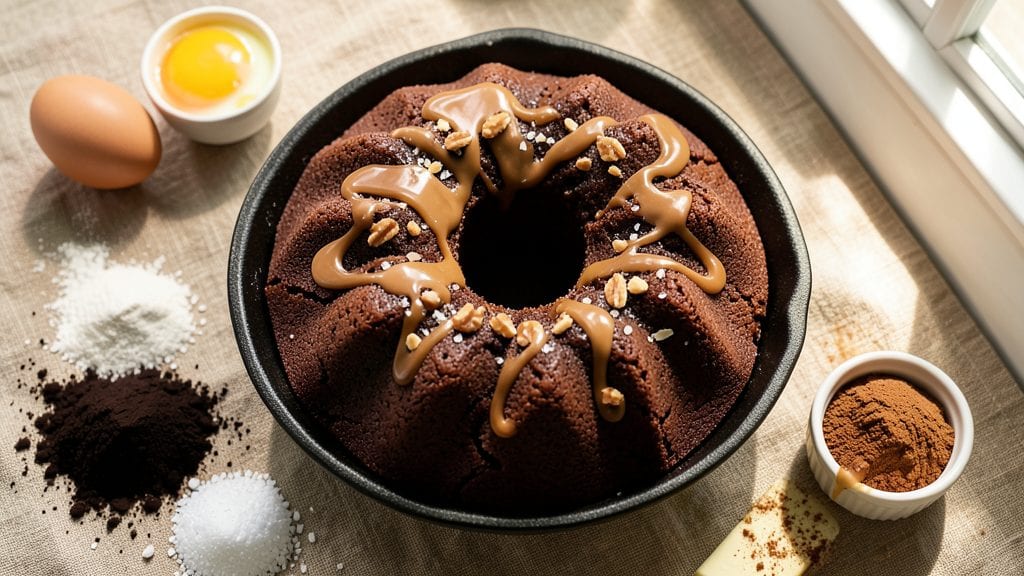
The German chocolate bundt cake recipe delivers layers of moist cake, toasted pecan-cocoa crunch, and a velvety chocolate glaze that tastes like a bakery masterpiece. This recipe combines classic German chocolate flavors with the elegant rise of a bundt pan, creating a dessert that’s both impressive and foolproof.
The secret lies in precise measurements and a slow bake to ensure that moist texture you crave.
What sets this bundt cake apart is the perfect balance of rich cocoa, sweet pecans, and a hint of cinnamon in the filling. The cake itself is tender yet sturdy enough to hold its shape, while the toasted pecans add a satisfying crunch that contrasts beautifully with the soft layers.
Every slice reveals a harmonious blend of flavors that’s hard to resist.
This recipe delivers restaurant-quality results with just a few simple steps—no advanced techniques required. The bundt pan creates those signature ridges and a beautiful presentation, while the chocolate glaze ties everything together with its glossy finish.
Whether you’re baking for a special occasion or treating yourself, this cake is guaranteed to impress.
Ready to bake? This recipe includes a traditional German chocolate filling and optional variations for those who prefer gluten-free or vegan adaptations. Let’s get started on creating a dessert that’s as delicious as it is elegant.
Ingredients for german chocolate bundt cake
Classic German chocolate bundt cake ingredients—where rich cocoa meets toasted pecan crunch for bakery-quality layers.
| Ingredient | Amount | Notes |
|---|---|---|
| All-Purpose Flour 🌾 | 3 cups | Sifted for even texture |
| Granulated White Sugar 🍚 | 2 cups | Aged sugar preferred for depth |
| Unsalted Butter 🧈 | 1 ½ cups | Cold, cubed for creaming |
| Large Eggs 🥚 | 4 whole | Room temperature for blending |
| Baking Cocoa Powder 🍫 | ¾ cup | Dutch-processed for smoothness |
| Baking Powder 🧂 | 2 tsp | Freshly measured for lift |
| Ground Cinnamon 🌿 | 1 ½ tsp | Ceylon preferred for purity |
| Salt 🧂 | ½ tsp | Fine sea salt for balance |
| Vanilla Extract 💧 | 2 tsp | Pure Madagascar bourbon |
| Milk 🥛 | 1 cup | Whole milk for richness |
| Toasted Pecans 🌰 | 2 cups | Chopped, lightly toasted |
| Light Corn Syrup 🍯 | ½ cup | For filling consistency |
| Heavy Cream 🥛 | ½ cup | Full-fat for smooth glaze |
| Semi-Sweet Chocolate Chips 🍫 | 1 ½ cups | Enrobed in cocoa butter |
| Powdered Sugar 🍚 | 3 cups | For glaze sweetness |
The Dutch-processed cocoa powder is non-negotiable here—it dissolves smoothly for that velvety texture. Hershey’s Special Dark or Valrhona deliver professional results, while store-brand cocoa often tastes bitter. For the pecans, raw pecan halves toasted in butter until golden (not burned) create the signature crunch. Trader Joe’s sells pre-toasted pecans if you’re short on time, but homemade always tastes superior. The Ceylon cinnamon adds warmth without overpowering—substitute regular cinnamon if needed, but reduce to 1 tsp to avoid bitterness. For the butter, Plugrá or Land O’Lakes work well, but avoid salted varieties to maintain precise flavor balance.
No Dutch-processed cocoa? Natural cocoa powder works in a pinch, but reduce by 0.25 cup to avoid dryness. Substitute pecans with walnuts (toasted) for a different texture, though they lack the same sweetness. Running low on vanilla? Almond extract at 1 tsp adds depth, but the flavor profile shifts noticeably. For the glaze, powdered sugar must be sifted to avoid lumps—Domino or Culinary Art brands are ideal. The light corn syrup in the filling prevents crystallization; Karo is the gold standard, but high-fructose corn syrup in a bind. Always use whole milk and heavy cream—reduced-fat versions compromise moisture and richness.
Store the dry ingredients (flour, cocoa, cinnamon, baking powder) in airtight containers for 6 months in a cool, dark place. Butter keeps 3 months in the fridge, while eggs should be used within 3 weeks of purchase. The pecan filling can be prepped 2 days ahead and refrigerated; the glaze stays fresh for 5 days covered in the fridge. For make-ahead convenience, bake the cake 1 day ahead—it develops deeper flavor when stored at room temperature. Freeze unbaked cakes for 3 months by wrapping tightly in plastic and aluminum foil, thawing overnight before baking.
Why You'll Love This Recipe
- Bundt in Minutes: I swear, this cake comes together faster than takeout. Cream butter and sugar, toss in eggs and cocoa, then fold in flour—no fancy techniques, just a bowl and a whisk. The bundt pan does all the work while you sip your coffee.
- Cocoa Butter Bliss: That first bite? Rich chocolate meets buttery crumb, but not too sweet. The cocoa powder gives it depth, while the butter keeps it tender—no artificial aftertaste, just pure, warm chocolate satisfaction.
- Party or Snack: Slice it for a birthday cake, or grab a piece straight from the fridge for a 3 PM pick-me-up. It reheats beautifully (microwave + paper towel = magic) and keeps for days, so you’re never stuck scrambling for dessert.
- Budget-Friendly Luxury: You already have the ingredients—flour, sugar, butter—so this feels like a fancy treat without breaking the bank. A single batch feeds a crowd, and leftovers? They vanish faster than I can say “second helping.”
Step-by-step instructions for German chocolate bundt cake
Master the art of creating a rich, moist bundt cake with layers of pecan-cocoa crunch.
Prepare the Cake Batter
Preheat your oven to 350°F and grease a 10-cup bundt pan thoroughly with butter, then dust with flour, tapping out any excess. In a large mixing bowl, combine the 3 cups all-purpose flour, 2 cups granulated white sugar, 0.75 cup baking cocoa powder, 2 tsp baking powder, 1.5 tsp ground cinnamon, and 0.5 tsp salt. Whisk until evenly distributed—this ensures no pockets of dry ingredients remain.
In a separate bowl, beat the 1.5 cups unsalted butter until smooth, then add the 4 whole large eggs one at a time, mixing well after each addition. Gradually whisk in the 1 cup milk and 2 tsp vanilla extract until fully incorporated. With the mixer on low speed, gradually add the dry ingredients to the wet, mixing just until combined—overmixing develops gluten and can make the cake dense. Fold in the 2 cups toasted pecans and 1.5 cups semi-sweet chocolate chips by hand using a spatula, ensuring even distribution.
Bake to Perfection
Pour the batter into the prepared bundt pan and smooth the top with a spatula. Bake for 50-60 minutes, or until a toothpick inserted into the center comes out clean and the cake springs back when gently pressed. The cake is done when the edges pull away slightly from the pan and the top is set but still moist.
I recommend checking for doneness at the 45-minute mark—every oven varies. If the top browns too quickly, loosely tent the pan with foil to prevent overbrowning while allowing the center to cook through. The cake should have a rich, deep color with a slightly domed center that collapses slightly as it cools.
Prepare the Filling
While the cake bakes, prepare the filling by combining the 0.5 cup light corn syrup, 0.5 cup heavy cream, and 1 tbsp vanilla extract in a small saucepan. Heat over medium-low heat until the mixture is warm but not boiling, stirring constantly to avoid scorching. Remove from heat and let it cool slightly—this ensures the filling is silky smooth when poured.
Once the cake is done, carefully invert it onto a wire rack to cool for 15 minutes. Then, using a serrated knife, cut the cake horizontally into two even layers. Pour the warm filling between the layers, allowing it to absorb completely. This step is critical for that signature German chocolate moisture—don’t rush it.
Assemble and Glaze
Place the top layer back onto the cake and dust the entire surface with 3 cups powdered sugar, gently tapping to remove any excess. In a small bowl, whisk the remaining powdered sugar with 2-3 tbsp milk until smooth, creating a thin glaze. Drizzle this over the cake, letting it drip down the sides for a professional finish. The glaze should be glossy but not overly thick—adjust the milk as needed.
Let the cake cool completely before serving. The filling will continue to soften the layers, ensuring every bite is moist and rich. Slice with a serrated knife for clean, even pieces, and serve warm or at room temperature for the best texture. The contrast of the crunchy pecans, cocoa-rich cake, and creamy filling makes this a standout dessert.
Pro Tips For Making German Chocolate Bundt Cake
- Sift the Cocoa: I learned this the hard way—lumpy cocoa powder ruins the texture. Sift it with the flour and baking powder together before adding wet ingredients. That way, you avoid clumps and get a smoother batter. (Yes, even if you’re impatient like me.)
- Cream Butter Slowly: The butter should be soft, not melted, when you start creaming it with sugar. If it’s too warm, the mixture will split, and the cake will turn out dense. Take 10 minutes out of the fridge for it to soften—your future self will thank you.
- Skip Overmixing: Once you add the flour, mix just until combined. Overmixing develops gluten, and that’s how you end up with a tough, chewy cake instead of a tender one. Fold in the dry ingredients like you’re being gentle with a fresh snowbank.
- Grease the Bundt Well: This isn’t the prettiest method, but it’s the tastiest. Brush the pan with melted butter, then dust it with flour, tapping out the excess. Add a sprinkle of cocoa powder to the flour mix—it’ll give the cake a better release and a richer flavor. (Your cake will come out cleaner, too.)
Essential equipment for german chocolate bundt cake
Bundt Pan Essentials
A 10-cup nonstick bundt pan is non-negotiable for this recipe—it creates those signature ridges and elegant shape. I recommend the Wilton Perfect Results pan for its even heat distribution and easy release.
If your pan isn't nonstick, grease it generously with butter and dust with flour, tapping out excess to prevent sticking. Avoid silicone pans—they don't conduct heat as well, risking uneven baking.
For a flavor boost, I brush the pan with 1 tbsp melted butter before adding batter, which adds subtle richness to the cake's edges. 🌟
Mixing Tools Matter
Use a stand mixer with the paddle attachment for creaming butter and sugar—this incorporates air more efficiently than hand mixing. For the dry ingredients, a whisk ensures even distribution, preventing pockets of flour.
I prefer KitchenAid stand mixers for their consistent power, but a hand mixer works fine if you mix on medium speed for 2-3 minutes longer. For folding in pecans and chocolate chips, a rubber spatula prevents overmixing and keeps the batter's integrity intact.
Precision Measuring
Baking is a science, so accurate measurements are critical. Use a digital kitchen scale for dry ingredients like flour and sugar—this eliminates packing issues. For liquids, a liquid measuring cup with a spout ensures precision. I keep my Measuring Cups USA set on hand for consistency.
When measuring cocoa powder, spoon it into the cup and level it off—don't scoop directly from the bag, or you'll pack it too tightly, altering the recipe's balance. 💡
Heat Control Tools
A thermometer is your best friend for monitoring oven temperature—many ovens run 15-25°F hotter than set. I use an Oven Thermometer from Thermoworks to ensure my oven hits 350°F accurately. For even baking, place your bundt pan on the middle rack of the oven, where heat circulates most evenly.
If your oven has hot spots, rotate the pan halfway through baking for uniform results. A cooling rack is also essential—it prevents the cake from sitting in residual heat, which can make the bottom soggy.
Filling and Glaze Gear
For the filling, a small saucepan with medium-low heat control prevents scorching. I use a 3-quart stainless steel saucepan for even heat distribution. A fine-mesh sieve helps dust powdered sugar evenly over the cake, while a pastry brush works well for applying glaze in thin, even layers.
For assembling, a serrated knife ensures clean cuts when slicing the cake horizontally. A small offset spatula helps spread glaze smoothly for that bakery-style finish. 🎨
Optional Upgrades
Investing in a cake stand elevates your presentation, keeping the cake off the counter and showcasing its ridges. For extra crunch, a handheld torch can lightly toast pecans on top after baking. A food processor speeds up chopping pecans if you're making them from scratch.
For those who love texture, a microplane adds zest to the glaze by incorporating a touch of orange zest or cinnamon. These tools aren't essential, but they take your bundt cake to the next level. ⚡
Nutrition facts
Frequently asked questions
Why does my bundt cake stick to the pan?
Even with nonstick pans, sticking happens when butter or flour isn't distributed properly. Always grease with butter, then dust with flour and tap out excess—this creates a barrier between batter and pan. For stubborn pans, try brushing with melted butter after flouring. Never skip the greasing step, even with nonstick pans.
Can I make this cake without a bundt pan?
Yes! Use a 9-inch round or tube pan instead. The cake will still be delicious, though the shape will differ. For a bundt-style presentation, try a springform pan lined with parchment paper. Just reduce baking time by 5-10 minutes—these pans conduct heat differently. The texture and flavor remain identical!
How do I store leftover bundt cake?
Wrap tightly in plastic wrap and store at room temperature for 2-3 days in an airtight container. For longer storage, refrigerate for up to 5 days or freeze for 3 months. Thaw overnight in the fridge before serving. The glaze may harden slightly when cold—bring to room temperature for the best texture.
What's the secret to perfectly toasted pecans?
Toast pecans in a 350°F oven for 8-10 minutes until golden, stirring every 2 minutes. For extra flavor, toss with 1 tsp brown sugar and ½ tsp cinnamon before toasting. Never let them burn—over-toasted pecans taste bitter. Cool completely before adding to the batter.
Can I substitute cocoa powder with melted chocolate?
Not directly—cocoa powder provides structure and moisture. For a substitution, melt 1 cup semi-sweet chocolate with 2 tbsp butter and cool slightly, then fold into the batter. Reduce the batter's milk by ¼ cup to maintain balance. The texture will be slightly denser, but the flavor will be richer.