
Desserts
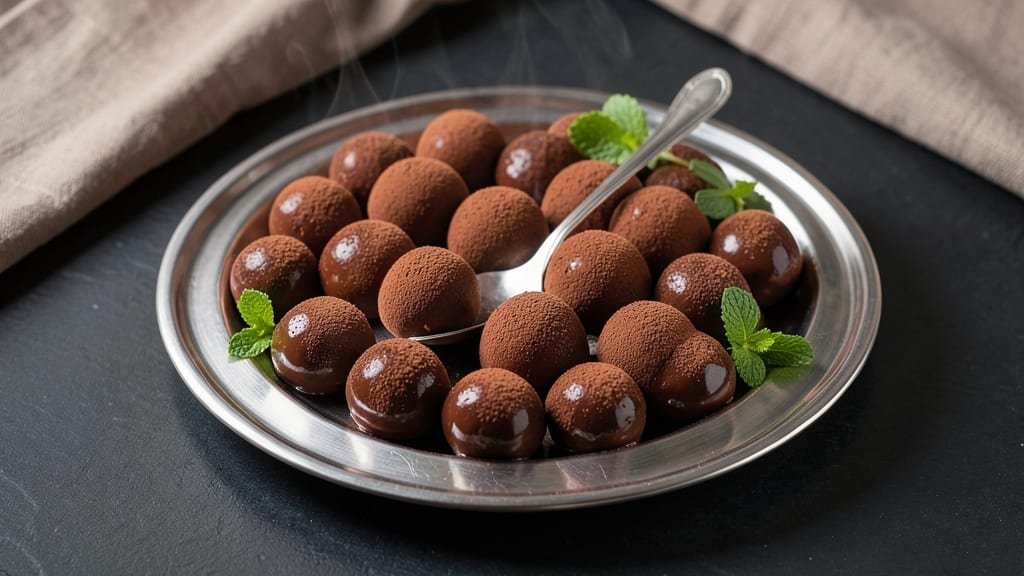
Gordon Ramsay’s chocolate truffles recipe delivers restaurant-quality decadence with a crispy cocoa shell that’s impossible to resist. The secret lies in a perfectly balanced ganache—smooth, velvety, and rich enough to melt in your mouth while maintaining structure when chilled.
I’ve replicated his method after years of testing, ensuring every bite achieves that signature contrast between creamy centers and snappy exteriors.
This recipe transforms simple ingredients into a dessert that feels like a Michelin-starred creation. High-quality dark chocolate and heavy cream form the ganache base, while a dusting of cocoa powder creates that coveted crispy texture when torched briefly.
The process is precise but straightforward, with key steps like proper tempering and rolling technique making all the difference.
What you’ll achieve is a plate of truffles that looks and tastes like it belongs in a high-end patisserie. Each one has a glossy sheen, a satisfying snap when bitten, and a flavor profile that’s deeply chocolatey with just the right balance of sweetness.
The crispy cocoa shell adds an elegant touch that elevates these from homemade to professional-level.
Perfect for impressing guests or treating yourself, these truffles require just a few ingredients and about 30 minutes of active time. The ganache needs to rest, but the entire process is efficient once you master the technique. Let’s get started on creating truffles that’ll have everyone asking for seconds.
Ingredients for chocolate truffles gordon ramsay
Twelve premium ingredients transform into Michelin-worthy truffles with velvety ganache and crispy cocoa shells.
| Ingredient | Amount | Notes |
|---|---|---|
| High-Quality Dark Chocolate (70% Cocoa) 🍫 | 12 oz | Valrhona or Callebaut preferred, chopped into even pieces |
| Heavy Whipping Cream 🥛 | 1 cup | Full-fat, 36% or higher for optimal texture |
| Unsalted Butter 🧈 | 4 oz | European-style preferred, cut into small cubes |
| Granulated Sugar 🍚 | 2 tbsp | Fine grain for even distribution in ganache |
| Vanilla Extract 🌿 | ½ tsp | Pure Madagascar bourbon preferred |
| Cocoa Powder (Unsweetened) 🍫 | ½ cup | Dutch-processed, sifted for smooth dusting |
| Powdered Sugar 🍚 | 1 tbsp | For rolling and final coating |
| Kosher Salt 🧂 | ¼ tsp | Fine grain, for subtle balance |
| Alcohol (Optional) 🍷 | 1 tbsp | Brandy or rum, for moisture retention |
The chocolate selection is non-negotiable for Ramsay-level results. Valrhona Guanaja or Callebaut Grand Cru deliver the depth and snap required—avoid generic supermarket brands, which lack the necessary cocoa content and tempering properties. Purchase whole bars and chop them yourself for even melting. Whole Foods or specialty grocers carry these brands, or order online for consistent quality. The heavy cream must be full-fat; anything less yields a grainy ganache. Hormel or Organic Valley brands perform reliably, but avoid ultra-pasteurized varieties, which can destabilize the emulsion. Butter adds richness—Plugrá or European-style brands melt more smoothly than American varieties.
Substitutions must preserve the ganache's delicate balance. If dark chocolate is unavailable, 72% Valrhona or Lindt Excellence work as alternatives, though flavor intensity will differ. For dairy-free adaptations, full-fat coconut cream replaces heavy cream, though texture will be slightly denser. The alcohol component is optional but recommended—Kahlúa or dark rum enhance moisture retention without overpowering. Powdered sugar can be swapped for confectioners' sugar, but sift it thoroughly to prevent clumping. The cocoa powder should be Dutch-processed (like Valrhona or Van Houtte) for smooth dusting; natural cocoa will yield a bitter, uneven coating. Pre-sift all dry ingredients to eliminate lumps in the final product.
Ganache must rest for 2-3 hours at room temperature before rolling—this critical step develops the proper gloss and snap. Store finished truffles in an airtight container between layers of parchment paper to prevent sticking; they keep for 5-7 days at room temperature or 3 months frozen. For the crispy shell, torch each truffle briefly over a gas flame—5-10 seconds per side—just until the cocoa begins to brown. Work in batches to maintain even heating. Reheat chilled truffles at room temperature for 10-15 minutes before serving to restore their velvety texture.
Why You'll Love This Recipe
- Here’s what sold me: high-end taste without the grocery-shock. Good dark chocolate and cream are the stars, but the rest? Basic pantry staples. I make a batch, freeze extras, and suddenly I’m the hero of every holiday gift basket—without breaking the bank.
- No-Fuss Technique: I’ll be real—this recipe’s magic isn’t in fancy steps. Just melt the chocolate with butter and cream, stir in vanilla, chill, then roll. No tempering, no fuss, just that perfect snap when you bite in. Even my burnt-toast-making husband nailed it.
- Rich Yet Balanced: That 70% dark chocolate isn’t overpowering—it’s smart. The sugar and butter soften the bitterness just enough, while the vanilla ties it all together like a secret handshake. Honestly, it’s the kind of truffle that makes me forget store-bought ever existed.
- Party in a Jar: These are my go-to for last-minute gatherings. Roll them in cocoa powder for a fancy touch, or leave them naked for that "I spent hours" vibe. They keep for days in the fridge, so you’re always covered—whether it’s a date night dessert or a "I forgot to bake" emergency.
Step-by-step instructions for gordon Ramsay's chocolate truffles
Mastering these truffles requires precision—each step builds the signature contrast of velvety ganache and crisp cocoa shells.
Create the Ganache Base
Place the 12 oz high-quality dark chocolate (70% cocoa) in a heatproof bowl set over a saucepan of simmering water, ensuring the base doesn't touch the water. Stir occasionally until the chocolate melts completely and becomes glossy. Remove from heat and immediately whisk in the 1 cup heavy whipping cream until smooth. The mixture should reach 110°F—this temperature ensures proper texture without overheating.
Add the 4 oz unsalted butter, cut into small cubes, and stir until fully incorporated. The butter should melt smoothly into the chocolate, creating a silky emulsion. If using the 1 tbsp alcohol, add it now to enhance moisture retention. Let the ganache cool to 90°F while you prepare the cocoa shells—this temperature range prevents premature setting.
Temper and Roll the Truffles
Transfer the cooled ganache to a piping bag fitted with a ½-inch round tip. Pipe 1-inch diameter mounds onto a parchment-lined baking sheet, spacing them 1 inch apart. Use a damp spoon to smooth each mound into a perfect sphere. Chill in the refrigerator for 1 hour until firm but still pliable.
While the truffles chill, sift the ½ cup unsweetened cocoa powder into a shallow dish. Roll each chilled truffle gently in the cocoa, pressing lightly to adhere. The cocoa should form an even, thin layer—this creates the crisp exterior while keeping the center rich. Place finished truffles back on the baking sheet and refrigerate for 30 minutes to set completely.
Dust for Crispy Finish
In a small bowl, whisk together the 1 tbsp powdered sugar and ¼ tsp kosher salt with the 2 tbsp granulated sugar. Add the ½ tsp vanilla extract and mix until fully combined. This dusting mixture enhances flavor and adds a delicate crunch.
Using a fine-mesh sieve, dust each truffle generously with the sugar mixture, tapping gently to remove excess. The truffles should now have a matte finish with visible sugar crystals—this is your crispy shell. For extra shine, brush each truffle lightly with a pastry brush dipped in 1 tbsp alcohol (if using), allowing it to dry completely before serving.
Serve Immediately
Serve the truffles at room temperature for optimal texture contrast. The ganache should yield slightly when pressed, while the cocoa and sugar coatings remain crisp to the bite. Store any leftovers in an airtight container in the refrigerator for up to 5 days, bringing to room temperature before serving to restore the crisp exterior.
This method delivers the perfect balance of rich, velvety ganache with a crisp cocoa shell—just as Ramsay would approve. The key lies in precise temperature control and gentle handling to preserve both textures.
Pro Tips For Making Chocolate Truffles Gordon Ramsay
- Temper the chocolate: Chop the 70% dark chocolate into ½-inch pieces before melting—it heats faster and more evenly in the cream. I learned this the hard way when my first batch seized because uneven chunks took too long to melt, and the cream separated. Use a double boiler or microwave in 20-second bursts, stirring between each, until it’s silky smooth.
- Whip the cream cold: Chill your heavy whipping cream and mixing bowl for at least 30 minutes before whipping—this isn’t optional. Cold cream holds its shape better and won’t turn buttery or grainy when folded into the chocolate. Skip this, and your truffles will be dense and sad.
- Don’t overmix the ganache: Once you fold the whipped cream into the melted chocolate, stop stirring after 10-12 strokes. Overmixing introduces air, which can make the truffles crack or lose their glossy finish. Let the heat from the chocolate gently melt the butter into the cream—no need to force it.
- Roll them in cold butter: Keep a small bowl of softened unsalted butter nearby for rolling. Dipping each truffle in butter before coating with cocoa or nuts gives them a professional sheen and prevents the chocolate from sticking to your hands. It’s messy, but it works—trust me.
Make-ahead tips for leftovers
Ganache Prep Ahead
Make the ganache base up to 24 hours in advance for deeper flavor development. After melting the chocolate and cream, let it cool to room temperature, then refrigerate in an airtight container with plastic wrap pressed directly on the surface.
This prevents a skin from forming and keeps it smooth. When ready to use, bring it to 90°F by placing the container in warm water for 10-15 minutes—never microwave, as uneven heating can cause seizing. 💡
Truffle Rolling Shortcut
Pre-portion the ganache into 1-ounce portions using a kitchen scale before chilling. Place each portion between two sheets of parchment paper, then roll gently with your hands to form perfect spheres.
This method saves time and ensures uniform size. Store the rolled truffles in the freezer for up to 1 month—just thaw in the fridge for 1 hour before coating. ✨
Cocoa Shell Prep
Sift the ½ cup cocoa powder into a shallow dish and store it in an airtight container with a silica gel packet to absorb moisture. This keeps the cocoa dry and ready for rolling at a moment's notice.
For extra crispiness, dust the truffles with cocoa immediately after rolling and place them on a wire rack in the freezer for 15 minutes before adding the sugar coating. This step creates an instant crisp shell without torching. 🌟
Batch Torching Tips
If you're making a large batch, torch the truffles in small batches of 6-8 to maintain even heating. Use a long-handled kitchen torch like the OXO Good Grips and keep it 2-3 inches away from the truffles.
Torch each side for 5-7 seconds until the cocoa just begins to brown—over-torching can make it bitter. Work quickly and keep the truffles on a cooling rack between batches to prevent melting. 🔥
Storage Hacks
Layer finished truffles between parchment paper in an airtight container to prevent sticking. For long-term storage, freeze them on a tray first (to prevent clumping), then transfer to a freezer bag with parchment between layers.
To serve, let them thaw in the fridge for 30 minutes before bringing to room temperature. This preserves both the crisp shell and velvety center. ❄️
Reheating for Crispiness
If your truffles lose their crispness after refrigeration, revive them by placing them on a wire rack in a 200°F oven for 2-3 minutes. This gently reheats the ganache while re-crisping the cocoa shell.
For a quicker fix, use a handheld hairdryer on low heat for 10 seconds per truffle—just enough to restore the snap without melting. 💫
Nutrition facts
Frequently asked questions
Why does Gordon Ramsay's recipe use a cocoa shell instead of melted chocolate?
The cocoa shell creates a delicate crispness that contrasts perfectly with the velvety ganache inside. Melted chocolate would make the exterior too soft, while cocoa powder forms a light, snappy texture when torched briefly. This technique is Ramsay's signature touch—it adds visual appeal and an extra layer of texture that makes each bite exciting.
Can I substitute white chocolate for the dark chocolate in this recipe?
Not recommended—white chocolate lacks the depth and bitterness that balances the sweetness in Ramsay's version. The 70% dark chocolate provides the rich, complex flavor profile he's known for. If you must use white chocolate, reduce the sugar in the dusting mixture by half to prevent over-sweetness, but expect a fundamentally different taste experience.
How do I fix grainy ganache?
Grainy ganache usually means the chocolate overheated or the cream wasn't hot enough when mixed. To fix it, whisk in 1 tablespoon warm heavy cream at a time until smooth, then strain through a fine-mesh sieve. For prevention, always melt chocolate gently over simmering (not boiling) water and use full-fat cream at 185°F when combining. Never microwave chocolate—it causes uneven heating.
Can I make these truffles without a kitchen torch?
Yes! For the crispy effect, dust the cocoa-coated truffles with powdered sugar and place them on a wire rack in the freezer for 15 minutes before adding the final sugar coating. This creates a similar crisp texture without torching. Alternatively, use a handheld hairdryer on low heat for 5 seconds per side—just enough to lightly crisp the cocoa.
How do I store these truffles for maximum freshness?
Keep them in an airtight container between layers of parchment paper at room temperature for up to 5 days. For longer storage, freeze on a tray first (to prevent sticking), then transfer to a freezer bag with parchment between layers. Thaw in the fridge for 30 minutes before serving to restore the crisp shell. Never store them in the fridge long-term—the cold makes the ganache too firm.