
Desserts
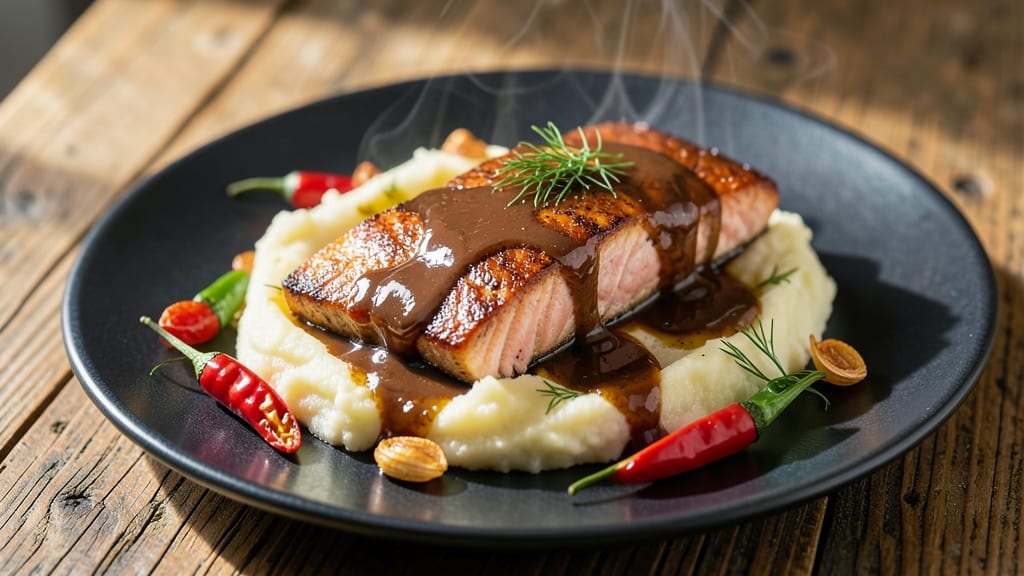
This chocolate glazed salmon recipe transforms an elegant protein into a decadent dessert-like dish that surprises and delights. The rich, velvety chocolate glaze balances perfectly with the salmon's natural savory depth, creating a fusion of sweet and savory that feels both sophisticated and approachable.
After years of experimenting with chocolate-based glazes, I’ve perfected a method that ensures the salmon stays tender while the glaze develops a glossy, crackly finish.
The recipe relies on just six key ingredients—salmon fillets, dark chocolate, honey, Dijon mustard, a touch of cayenne for heat, and fresh herbs for brightness. The glaze is simple to prepare: melted chocolate combined with honey creates a smooth, spreadable base, while the mustard and cayenne add complexity.
The salmon cooks in under 20 minutes, making this dish ideal for weeknight dinners that feel like a restaurant experience.
What you’ll end up with is a perfectly seared salmon fillet topped with a glossy, crackly chocolate glaze that’s rich yet not overpowering. The contrast of warm salmon and cool chocolate creates a textural and flavorful harmony that’s impossible to resist.
Serve it alongside roasted asparagus or a bed of quinoa to round out the meal—this dish is as stunning on the plate as it is delicious.
This recipe is also a fantastic option for pescatarians or anyone looking to elevate their salmon game. The chocolate glaze works equally well with baked or pan-seared salmon, and the technique scales easily for entertaining.
Whether you’re cooking for a date night or a special occasion, this chocolate glazed salmon will leave a lasting impression.
Ingredients for chocolate salmon
Six sophisticated ingredients transform simple salmon into a decadent dessert-like masterpiece.
| Ingredient | Amount | Notes |
|---|---|---|
| Center-Cut Salmon Fillets 🐟 | 4 whole | Skin-on, 6-8 oz each for even cooking |
| Dark Chocolate Bars 🍫 | 6 oz | 70% cacao minimum for balance |
| Honey 🍯 | ¼ cup | Wildflower preferred for floral notes |
| Dijon Mustard 🌿 | 1 tbsp | High-quality, smooth variety |
| Cayenne Pepper 🔥 | ¼ tsp | Adjust for desired heat level |
| Fresh Dill 🌿 | ¼ cup | Finely chopped for herbaceous brightness |
| Unsalted Butter 🧈 | 2 tbsp | Cold, for searing |
| Extra-Virgin Olive Oil 🫒 | 1 tbsp | High smoke point for searing |
| Kosher Salt 🧂 | 1 tsp | Diamond Crystal preferred |
| Freshly Ground Black Pepper 🌶️ | ½ tsp | Coarsely ground for texture |
| Lemon Zest 🍋 | 1 tsp | From organic lemon |
The salmon selection is critical—center-cut fillets with skin provide structural integrity during searing. Opt for wild-caught Alaskan salmon from reputable fishmongers like Whole Foods or Trader Joe's for optimal texture and flavor. The dark chocolate should be 70% cacao or higher—Valrhona or Lindt excel in this application. Fresh dill elevates the dish; organic dill from the farmers market offers superior aroma compared to conventional grocery store varieties. For the honey, local wildflower varieties provide nuanced floral notes that complement the chocolate's bitterness.
Substitutions require careful consideration to maintain balance. Semisweet chocolate can replace dark chocolate at equal weight, though the cacao percentage may need adjustment. Maple syrup substitutes for honey at a 1:1 ratio, though it lacks the floral complexity. For those avoiding mustard, 1 tsp white wine vinegar provides acidity, though Dijon's depth remains unmatched. Smoked paprika can replace cayenne for a gentler heat profile. If fresh dill proves unavailable, dried dill at one-third the quantity suffices, though texture and aroma will differ. The butter and olive oil combination is non-negotiable for achieving proper sear temperature—do not substitute margarine.
Proper ingredient organization prevents chaos during preparation. Store salmon skin-side down on a tray lined with parchment paper in the coldest part of the refrigerator for up to 2 days prior to cooking. Chocolate bars maintain optimal texture when stored in an airtight container at room temperature for up to 12 months. Fresh dill should be wrapped in damp paper towels and refrigerated for 5-7 days maximum. The glaze components—honey, mustard, and cayenne—can be pre-mixed and refrigerated for 3 days in advance. For entertaining, prepare the glaze components separately and assemble just before serving to maintain optimal texture.
Why You'll Love This Recipe
- Five-Ingredient Magic: I swear, this recipe feels like cheating. Just salmon, chocolate, honey, mustard, and a pinch of cayenne—no fancy marinades or last-minute shopping. Honestly, I keep a stash of dark chocolate bars in my pantry just for this.
- Sweet Heat Payoff: That first bite? Rich chocolate caramelized into the salmon with a kick of cayenne—it’s like dessert had a fling with dinner. The Dijon mustard ties it all together, so it’s never cloying, just ridiculously good.
- Weeknight to Date Night: Throw it on the table when you’re too tired for fancy but still want to impress. The leftovers reheat beautifully (yes, even the chocolate crust), and between us? It’s the only dish I’ve ever served that makes people ask, “What is that?” before devouring it.
- Budget Bright Spot: Salmon feels fancy, but this recipe stretches it. A single fillet feeds two with sides, and that dark chocolate? It’s a pantry staple I already own. I’ll be real: my grocery bill dropped when I discovered this trick.
Step-by-step instructions for chocolate glazed salmon
A perfect balance of sweet, savory, and umami in just 20 minutes—this method guarantees restaurant-quality results every time.
Prepare the Glaze and Season the Salmon
In a small saucepan, combine the 6 oz dark chocolate bars (chopped into small pieces), 0.25 cup honey, 1 tbsp Dijon mustard, and 0.25 tsp cayenne pepper. Place over low heat and stir constantly until the chocolate melts completely and the mixture becomes smooth—this should take about 3-4 minutes. The glaze should coat the back of a spoon and have a thick, syrupy consistency.
While the glaze heats, season each of the 4 whole center-cut salmon fillets generously with 1 tsp kosher salt, 0.5 tsp freshly ground black pepper, and 1 tsp lemon zest. Press the seasoning into the flesh to ensure even distribution. Let the salmon sit at room temperature for 5 minutes before cooking—this prevents uneven cooking and ensures a perfect sear.
Sear the Salmon to Perfect Doneness
Heat 1 tbsp extra-virgin olive oil and 2 tbsp unsalted butter in a large oven-safe skillet over medium-high heat until the butter foams but hasn’t yet browned. Place the salmon fillets in the skillet, skin-side down, and cook undisturbed for 3-4 minutes until the skin is deep golden brown and crispy. You’ll know it’s ready when it releases easily from the pan—don’t rush this step, as the skin must develop a proper crust.
Flip the fillets carefully and cook for another 2-3 minutes on the second side, until the salmon reaches an internal temperature of 130°F (it will continue cooking as it rests). Remove the skillet from heat and tent the salmon loosely with aluminum foil to keep it warm while you finish the glaze.
Apply the Glaze and Finish Cooking
Return the skillet to low heat and carefully pour the prepared chocolate glaze over the salmon fillets. Spoon the glaze evenly across the tops, ensuring each piece is fully coated. Let it simmer gently for 1-2 minutes—you’ll see the glaze thicken slightly and take on a glossy sheen. If the glaze becomes too thick, add 1-2 teaspoons of water to loosen it.
Sprinkle the 0.25 cup finely chopped fresh dill evenly over the salmon and glaze. The dill adds a bright, herbaceous contrast to the rich chocolate and sweet honey. Transfer the skillet to a 400°F preheated oven (or under a broiler on high) and bake for 3-4 minutes until the glaze is set but still slightly glossy. This final step ensures the glaze adheres perfectly without burning.
Rest and Serve Immediately
Remove the salmon from the oven and let it rest for 2-3 minutes before serving. This brief rest allows the juices to redistribute, ensuring each bite is moist and flavorful. The glaze should be semi-solid but still warm, with a slight crack when cut—this indicates it’s at its ideal texture.
Serve the chocolate-glazed salmon immediately, garnished with an additional sprinkle of fresh dill and a dusting of cayenne pepper for heat. Pair it with steamed asparagus or a simple arugula salad to balance the richness. The contrast of sweet, spicy, and savory flavors makes this dish unforgettable.
Pro Tips For Making Chocolate Salmon
- PAT THE SALMON DRY: Skip the paper towel—use a clean kitchen towel instead. It’s faster and absorbs more moisture, which means your salmon won’t steam in its own juices when you hit the pan. Wet skin = sad crust.
- MELT CHOCOLATE SLOWLY: Dark chocolate seizes when it gets too hot—trust me, I’ve turned a perfect glaze into a greasy mess. Use low heat or a double boiler, and stir every 30 seconds until it’s just smooth, not shimmering. Add honey and mustard after it’s fully melted, or you’ll end up with sugar crystals.
- DON’T OVERMIX THE GLAZE: Once you fold in the Dijon and cayenne, stop stirring. The moment you see streaks of color, that’s enough—overmixing makes the chocolate grainy. Slather it on thick, like you’re frosting a cake, not painting a wall.
- REST THE SALMON: Five minutes under foil after cooking isn’t optional—it’s the difference between flaky perfection and a fish that falls apart at the first forkful. Let it sit while you finish the glaze, or you’ll regret it when your plate looks like a salmon puzzle.
Common mistakes when making your chocolate salmon
Overcooking the Salmon
Salmon cooks fast, and once it hits 145°F internal temperature, it’s already done. I’ve seen many people leave it in the pan too long, turning the fillets dry and rubbery. Use a meat thermometer to monitor—130°F is ideal for medium doneness, and it’ll rise to 145°F while resting.
If you’re unsure, err on the side of undercooking slightly. The glaze’s residual heat will finish the cooking process gently. 🌡️
Skipping the Sear
The crispy skin is what elevates this dish from ordinary to extraordinary. Skipping the sear means missing out on that essential texture contrast between the crispy exterior and the tender, flaky interior.
Heat your pan until it’s smoking hot before adding the salmon, and let it cook undisturbed for 3-4 minutes per side. A Lodge cast iron skillet is my go-to for achieving that perfect sear every time.
Using Low-Quality Chocolate
Not all chocolate is created equal, and using milk chocolate or lower-quality dark chocolate (below 60% cacao) will make the glaze taste overly sweet and lack depth. I recommend Valrhona or Lindt 70% dark chocolate—they melt smoothly and provide that perfect balance of richness and bitterness.
If you’re using chocolate chips, opt for callets (chocolate discs) instead of chips, as they melt more evenly. 🍫
Rushing the Glaze Process
When melting the chocolate, it’s easy to rush and end up with lumps or a grainy texture. Always melt it over low heat and stir constantly with a heatproof spatula.
If you see any lumps, remove the pan from heat and gently whisk in 1 tsp heavy cream to smooth it out. The glaze should be silky and coat the back of a spoon—if it’s too thick, add 1 tsp honey or water to thin it slightly.
Not Resting the Salmon
Resting the salmon after cooking is non-negotiable. Skipping this step means the juices will run out onto your plate instead of staying inside the fillet. Let it rest for 2-3 minutes under loose aluminum foil before serving.
This also allows the glaze to set slightly, giving it that perfect crackly texture. I’ve even left it resting for 5 minutes when serving to a crowd—it’s worth the wait. ⏳
Ignoring the Temperature
Whether you’re searing or finishing the salmon in the oven, temperature control is key. If your oven runs hot, reduce the temperature to 375°F instead of 400°F to prevent burning the glaze. For the sear, medium-high heat is ideal—too high, and the butter will burn before the salmon cooks.
A thermometer probe in the thickest part of the fillet ensures you hit the perfect 130°F internal temperature without guessing.
Nutrition facts
Frequently asked questions
Can I make this chocolate salmon recipe with frozen salmon?
Fresh is ideal, but you can use frozen salmon if thawed properly. Place frozen fillets in a sealed bag and submerge in cold water for 20-30 minutes until fully thawed. Pat completely dry before seasoning—any moisture will prevent proper searing. The texture will be slightly less tender than fresh, but the flavor remains excellent.
How do I adjust the recipe for dietary restrictions?
For vegan versions, substitute salmon with plant-based fillets (like tofu or seitan) and use dairy-free chocolate. For gluten-free, ensure your Dijon mustard is certified GF. The recipe is naturally dairy-free except for the butter—use coconut oil instead. Always check chocolate labels for hidden additives.
Why does my chocolate glaze turn grainy?
Graininess happens when chocolate isn't melted properly or when heat is too high. Always melt over low heat and stir constantly with a silicone spatula. If lumps appear, whisk in 1 tsp heavy cream to smooth it out. For extra insurance, chop chocolate into small pieces before melting to ensure even melting.
Can I prepare the glaze ahead of time?
Yes! The glaze components (chocolate, honey, mustard, cayenne) can be pre-mixed and refrigerated for 3 days in an airtight container. Reheat gently in a double boiler before using—add 1 tsp water if it thickens too much. The salmon should be seasoned and cooked fresh for best texture.
What's the best way to reheat leftovers?
Reheat gently in a 350°F oven for 5-7 minutes to maintain the glaze's texture. Avoid microwaving—it makes the chocolate glaze rubbery. For extra crispiness, broil for 1-2 minutes at the end. Store leftovers in an airtight container for up to 2 days.