Desserts
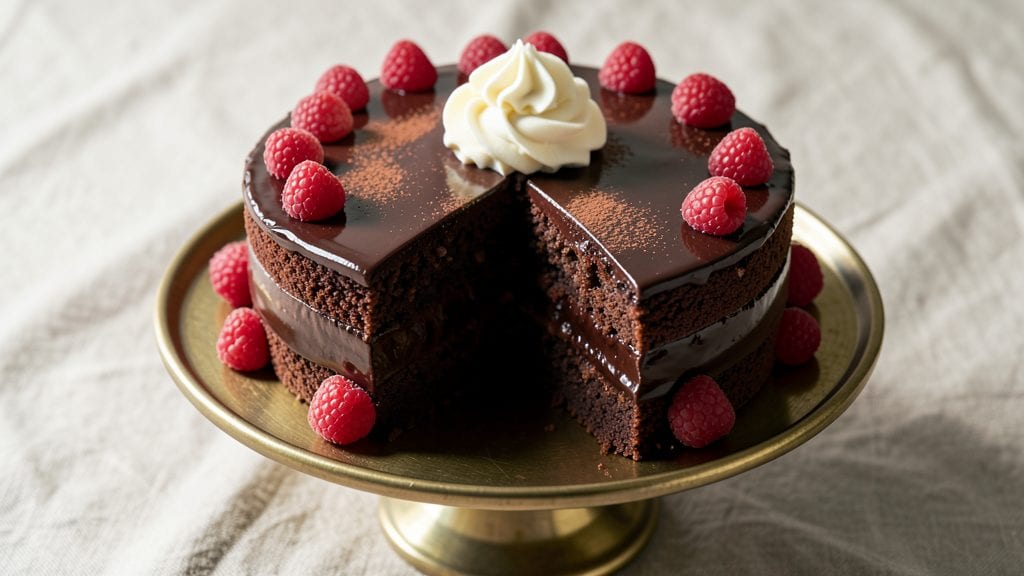
This basic chocolate fudge cake recipe delivers layers so moist they practically melt in your mouth—thanks to a clever coffee boost that deepens the chocolate flavor without overpowering it.
The secret lies in precise ingredient ratios and a foolproof creaming method that creates a tender crumb you won’t find in boxed mixes. I’ve baked this cake for holiday gatherings and family dinners, and it’s always the first to disappear.
The foundation of this recipe is traditional baking techniques—creaming butter and sugar until light, then folding in cocoa for maximum richness. A splash of coffee enhances the chocolate flavor while keeping the texture ultra-moist, and a simple syrup glaze ties everything together.
It’s the kind of cake that tastes homemade even when you’re short on time, with layers that stay tender for days.
What you’ll end up with is a rich, fudgy chocolate cake with a velvety texture and subtle coffee undertones that make every bite more complex.
The glaze adds a glossy finish that’s both decorative and delicious, while the moist layers ensure no one will ask for seconds—because they won’t be able to stop at one. Perfect for birthdays, holidays, or just because.
This recipe scales easily for crowds, and the frosting can be customized with whipped cream or chocolate ganache. Whether you’re a beginner or a seasoned baker, the steps are straightforward, and the results are always impressive. Let’s get baking!
Ingredients for basic chocolate fudge cake
Unsalted butter, cocoa, and coffee powder create the richest chocolate cake you'll ever bake.
| Ingredient | Amount | Notes |
|---|---|---|
| Unsalted Butter 🧈 | 1 cup | Room temperature, full-fat preferred |
| Granulated Sugar 🍚 | 2 cups | White or light brown |
| Dutch-Processed Cocoa Powder 🍫 | ¾ cup | High-quality, no sugar added |
| All-Purpose Flour 🌾 | 2 cups | Sifted, spooned and leveled |
| Baking Powder 🍞 | 1 ½ tsp | Aluminum-free preferred |
| Instant Espresso Powder ☕ | 2 tsp | Not instant coffee granules |
| Salt 🧂 | ½ tsp | Fine sea salt preferred |
| Milk 🥛 | 1 cup | Whole milk for richness |
| Vanilla Extract 🌸 | 1 tsp | Pure, high-quality vanilla |
| Large Eggs 🥚 | 2 whole | Room temperature |
| Water 💧 | ¼ cup | For simple syrup glaze |
| Granulated Sugar 🍚 | ¼ cup | For simple syrup glaze |
The cocoa powder is where you won’t want to skimp. Hershey’s Special Dark or Valrhona make all the difference—avoid the cheaper brands that can taste bitter or chalky. For the coffee boost, Starbucks instant espresso powder is my go-to, but any high-quality instant espresso works. The butter needs to be at room temperature (about 65°F)—press it gently, and if it leaves a slight indent, it’s ready. If you’re using a stand mixer, let it warm up for 5 minutes first to help with creaming. The milk should be cold when measuring to prevent the butter from melting too quickly.
No instant espresso powder? Cold brew concentrate at half the amount works in a pinch, though it may make the cake slightly denser. Short on vanilla? Vanilla bean paste adds flecks of vanilla that make it feel more luxurious. The baking powder is crucial—don’t substitute baking soda here, or the cake will turn out too dense. For the glaze, you can swap granulated sugar for powdered sugar if you prefer a smoother finish, but the texture will be slightly different. If you’re baking in a humid climate, let your dry ingredients sit in the fridge for 20 minutes before mixing to prevent the cake from becoming too moist.
This cake keeps beautifully—3 days wrapped at room temperature or up to 5 days in the fridge. For longer storage, wrap tightly in plastic and freeze for up to 3 months. The glaze sets quickly, so assemble the cake right before serving. If you’re making this ahead for a party, assemble the cake layers (without the glaze) and store them separately. The glaze can be made a day ahead and reheated gently before drizzling. The coffee flavor actually intensifies slightly after the first day, so leftovers often taste even better.
Why You'll Love This Recipe
- Foolproof Foundation: I’ll never stress over cake again—this recipe’s just creaming butter, sugar, and cocoa, then folding in flour. No eggs? No problem. The Dutch-processed cocoa gives it that real chocolate depth without bitterness, and the baking powder keeps it light. Honestly, it’s the kind of cake that makes me feel like a baking pro, even when I’m just winging it.
- Rich Without Effort: That first bite? Pure chocolate bliss. The butter and sugar melt into the cocoa powder so smoothly, it tastes like it was baked in a professional kitchen. My kids (and my husband) fight over slices, and I’ve never heard anyone complain about the flavor. Between us, it’s the kind of cake that makes people ask for the recipe—then realize it’s just five basic ingredients.
- Party or Pajamas: This cake’s my go-to for birthdays, potlucks, or when I’m too tired to care. Slice it for a crowd or save half for breakfast—it’s that good. I’ll be real: I’ve even packed it for work when I needed a sweet pick-me-up. The texture stays moist for days, so it’s always ready when cravings hit.
- Budget Magic: No fancy ingredients, no wasted leftovers. A simple box of cocoa powder and a stick of butter stretch to feed six (or more if you’re like me). The cake keeps well wrapped, so I can bake once and enjoy it all week. Plus, it’s the kind of dessert that makes me feel fancy without breaking the bank—because sometimes, you just want chocolate, and this delivers.
Step-by-step instructions for basic chocolate fudge cake
Here's how to create rich, ultra-moist chocolate layers with a perfect coffee-infused depth.
Prepare the Simple Syrup Glaze
In a small saucepan, combine the 0.25 cup water and 0.25 cup granulated sugar from the ingredients list. Bring to a gentle boil over medium heat, then reduce to a simmer and cook for 3-4 minutes until the sugar fully dissolves. This creates a glossy, moisture-boosting glaze that keeps the cake tender. Remove from heat and let cool to room temperature—it should thicken slightly but remain pourable. The syrup will later be brushed between cake layers and over the top for that signature professional finish.
I like to taste the cooled syrup at this stage—it should be sweet but not cloying, with just a hint of caramel undertones. This simple step makes all the difference in achieving that signature fudge cake moisture without making the cake too dense. Keep it handy as we'll use it in the final assembly.
Cream Butter and Sugars
In a stand mixer fitted with the paddle attachment, beat the 1 cup unsalted butter (at room temperature) with the 2 cups granulated sugar on medium speed for 3-4 minutes. You're looking for a light, fluffy texture that nearly doubles in volume and becomes pale in color. This thorough creaming incorporates air into the batter, which creates that signature tender crumb and helps the cake rise properly.
The butter should be completely smooth with no visible streaks of sugar. If it looks too thick, let it sit at room temperature for another 5 minutes before continuing. This foundational step is critical—the espresso powder we'll add later needs to be fully incorporated into this light base to develop its deep chocolate notes without bitterness.
Add Wet Ingredients and Espresso
Add the 2 whole large eggs, one at a time, mixing on low speed after each addition until fully incorporated. Then add the 1 cup milk, 1 tsp vanilla extract, and 2 tsp instant espresso powder, mixing just until combined. The espresso powder might seem like an unusual addition, but it enhances the chocolate flavor while adding subtle depth. Don't overmix here—just until everything is evenly distributed.
Here's where the magic happens: the espresso powder needs to dissolve completely into the wet ingredients. I like to give the mixture a quick stir with a silicone spatula to ensure no powdery bits remain. This step creates the perfect balance between rich chocolate and that subtle coffee note that makes this cake stand out from basic chocolate cakes.
Combine Dry Ingredients
In a separate bowl, whisk together the 2 cups all-purpose flour, 1.5 tsp baking powder, 0.5 tsp salt, and 0.75 cup dutch-processed cocoa powder. Sift the mixture directly into the wet ingredients, mixing on low speed just until combined—you should still see small flour streaks. Overmixing develops gluten and can make the cake tough. The cocoa powder should be fully incorporated but not create a dense batter.
This is where the cake's texture begins to take shape. The dutch-processed cocoa powder (not natural cocoa) is key here—it's more alkaline, which enhances the chocolate flavor and creates that signature fudge-like richness. I like to use a spatula to gently fold in any stubborn dry bits around the edges of the bowl, ensuring even distribution.
Bake and Assemble
Divide the batter evenly between two 8-inch round cake pans lined with parchment paper. Bake at 350°F for 25-30 minutes, or until a toothpick inserted into the center comes out clean. The cakes should be slightly domed and set but still moist. Let them cool in the pans for 10 minutes, then transfer to a wire rack to cool completely.
Once completely cooled, level the tops if needed, then brush each layer generously with the reserved simple syrup glaze. Place one layer on a serving plate, then add the second layer on top. This glaze not only adds moisture but also creates that beautiful glossy finish. For extra indulgence, you can dust the top with powdered sugar or add a dusting of cocoa powder between layers.
Pro Tips For Making Basic Chocolate Fudge Cake
- Melt Butter Slowly: I learned this the hard way—dumping cold butter into hot sugar makes the mixture seize up like a stubborn mule. Instead, melt the butter first (just until it’s liquid, not browned) and let it cool to room temperature before mixing. That way, the sugar dissolves smoothly, and you won’t end up with lumps fighting you the whole time.
- Sift That Cocoa: Dutch-process cocoa is already mellow, but it’s still prone to clumping like a bad hair day. Sift it with the flour and baking powder before adding to the wet ingredients—this guarantees even distribution and a cake that’s rich, not streaky. (Yes, even if you’re impatient like me.)
- Don’t Overmix: The second you start folding in the flour mixture, stop when it’s just combined. Overmixing turns your fudge cake into a dense brick instead of a tender, moist slice. Use a spatula and give it two gentle turns—your future self will thank you.
- Test with a Toothpick: Skip the guesswork—insert a toothpick into the center when the edges look set. If it comes out with a few moist crumbs (not wet batter), the cake’s done. Pull it out too early, and you’ll end up with a gummy mess. (I know, I know—patience isn’t your strong suit either.)
Regional styles of basic chocolate fudge cake
Southern Fudge Cake
In the South, chocolate fudge cake often gets a velvety texture boost from corn syrup—I add ¼ cup to the batter for that signature moistness. The cake also frequently features a peanut butter frosting or a chocolate ganache drizzle.
Many Southern bakers use buttermilk instead of milk for a tangier flavor, and I’ve found that swapping ½ cup of the milk for buttermilk adds depth without altering the texture. 🌶️
Midwest Coffee House Style
The Midwest takes this cake to the next level by incorporating chocolate chips into the batter—about ½ cup of Ghirardelli dark chocolate chips folded in after mixing the dry ingredients. They also often add a whipped cream frosting with a hint of maple syrup for a lighter finish.
A common variation is to sprinkle crushed peppermint on top for a festive touch, especially around the holidays. This style keeps the cake rich but balances it with a lighter, airier frosting.
New England Spiced Twist
Up North, bakers love to add warm spices like cinnamon and nutmeg to the batter—about ½ tsp each—for a cozy, aromatic flavor. They also frequently pair the cake with a brown sugar glaze instead of simple syrup, which adds a caramelized depth.
A traditional touch is to serve slices with a scoop of vanilla bean ice cream, creating a decadent dessert experience. The spices work beautifully with the coffee notes, making this a perfect fall or winter treat. 🍂
West Coast Decadent Version
The West Coast leans into luxury ingredients for their fudge cake, often using high-fat European-style butter and single-origin dark chocolate for the cocoa. They also incorporate espresso shots (about 1 tbsp) into the batter for an intense coffee flavor.
A signature touch is topping the cake with chocolate-dipped strawberries or raspberry coulis for a fruity contrast. This version is all about indulgence, with a focus on rich, bold flavors that stand out in the cake’s simplicity. 🍓
Texas-Style Fudge Cake
In Texas, the cake often gets a pecan streusel on top—about ½ cup chopped pecans mixed with 2 tbsp brown sugar and 1 tbsp melted butter, sprinkled over the glaze before serving. They also frequently use whole milk and heavy cream in the batter for extra richness.
A popular variation is to add bourbon (about 1 tbsp) to the glaze for a boozy twist that pairs perfectly with the chocolate and coffee flavors. This version is hearty and perfect for warm climates where a heavier cake holds up better. 🥜
Nutrition facts
Frequently asked questions
Why does this recipe use instant espresso powder instead of coffee?
The espresso powder enhances the chocolate flavor without adding liquid, which could make the cake too wet. Just 2 teaspoons deepens the chocolate notes while keeping the texture ultra-moist. Regular coffee would require adjusting other ingredients, making this method simpler and more reliable.
Can I make this cake in a single 9-inch pan instead of two 8-inch pans?
Yes, but reduce the baking time by about 5-7 minutes—the cake will be thicker. For best results, use a water bath (wrap the pan in foil and place it in a larger pan with hot water halfway up the sides) to ensure even cooking. The texture will be slightly denser, but still delicious.
How do I fix a cake that's cracked on top?
Cracking usually happens from overbaking or opening the oven too soon. If it's minor, simply spread a thin layer of frosting or glaze over the cracks before assembling. For severe cracks, level the top with a serrated knife after cooling, then apply the glaze. The simple syrup glaze will help disguise any imperfections.
Can I substitute cocoa powder with melted chocolate?
Not directly—melted chocolate adds liquid that alters the batter's consistency. For a 1:1 substitution, use ½ cup melted dark chocolate (60-70% cocoa) and reduce the milk by ¼ cup. The texture will be slightly denser, but still rich. Always temper the chocolate first to prevent seizing.
How do I store leftovers to keep them moist?
Wrap the cake tightly in plastic wrap, then place it in an airtight container. Store at room temperature for 2-3 days or refrigerate for up to 5 days. For longer storage, freeze slices wrapped individually—they'll stay moist for up to 3 months. Reheat briefly in the microwave (10-15 seconds) to restore freshness.