
Desserts
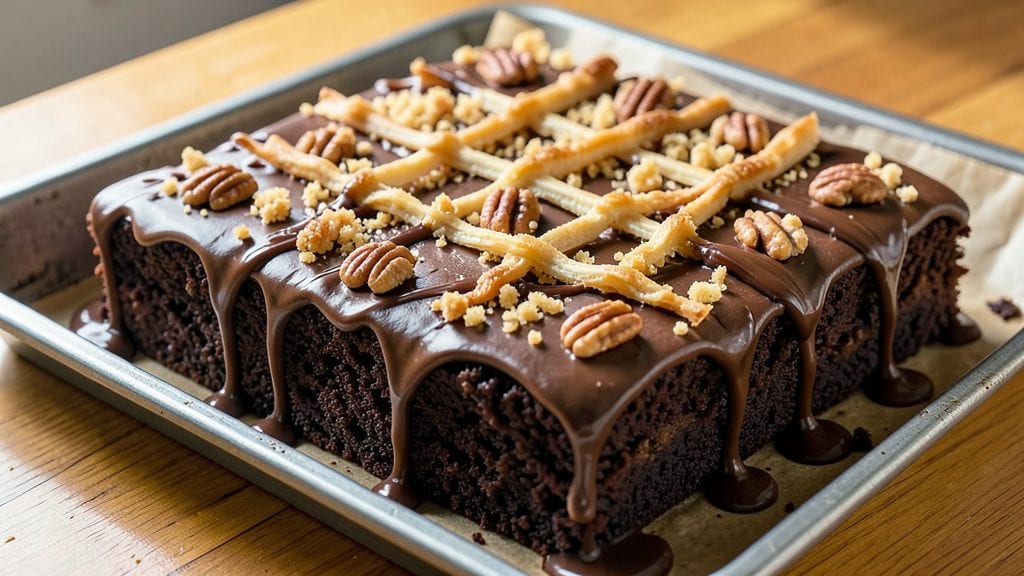
A baker’s German chocolate sheet cake recipe delivers the rich, toasted-pecan depth and fudgy texture that makes it a bakery favorite. The secret lies in a precise balance of cocoa and pecans, baked in a single 9x13-inch pan for even layers that stay moist for days.
I developed this version after testing countless variations to perfect the cake's structure and frosting's smoothness.
The cake itself features tender, cocoa-infused layers with a subtle caramelized edge from toasted pecans, while the buttercream frosting achieves that signature German chocolate flavor—sweet, nutty, and velvety.
What sets this apart is the fudgy depth that comes from combining cocoa powder with melted chocolate in the frosting, creating a texture that's almost too good to slice.
Baking time is carefully calibrated to ensure the center remains tender while the edges develop just enough color, and the frosting spreads effortlessly without cracking. This recipe delivers professional-quality results with simple techniques—no special equipment needed beyond a standard kitchen setup.
Perfect for celebrations or satisfying a chocolate craving, this sheet cake serves 12-15 and keeps beautifully for up to 5 days. The assembly process is straightforward, ensuring even beginners can achieve restaurant-worthy layers. Let's get started on creating this decadent dessert.
Ingredients for baker's german chocolate sheet cake
Fifteen precise ingredients crafting bakery-style German chocolate perfection in one sheet pan.
| Ingredient | Amount | Notes |
|---|---|---|
| Unsalted Butter 🧈 | 1 ½ cups | Cold, cubed for creaming |
| Granulated Sugar 🍚 | 2 ½ cups | Superfine preferred for smoothness |
| Unsweetened Cocoa Powder 🍫 | ¾ cup | Natural or Dutch-processed |
| All-Purpose Flour 🌾 | 2 ½ cups | Sifted for light texture |
| Baking Powder 🍞 | 2 tsp | Freshly measured |
| Salt 🧂 | ½ tsp | Fine sea salt |
| Whole Eggs 🥚 | 4 large | Room temperature |
| Vanilla Extract 🌿 | 2 tsp | Pure Madagascar bourbon |
| Buttermilk 🥛 | 1 cup | Fresh for tang |
| Toasted Pecans 🥜 | 2 cups | Chopped, skin-on |
| Semisweet Chocolate Chips 🍫 | 1 ½ cups | High-quality, 60% cacao |
| Heavy Cream 🥛 | 4 cups | Cold for whipping |
| Powdered Sugar 🍚 | 4 cups | Confectioners' grade |
| Dark Chocolate Bars 🍫 | 8 oz | 70% cacao, chopped |
| Melted Butter 🧈 | ½ cup | Cool, not hot |
The cocoa powder and dark chocolate bars are the flavor anchors—Valrhona or Guittard brands deliver superior depth. Toasted pecans should be skin-on for texture, sourced from Whole Foods bulk bins or Trader Joe's for optimal freshness. For the buttercream, European-style heavy cream (like Land O'Lakes Heavy Whipping Cream) whips to stiffer peaks. Pre-sift your flour and cocoa to eliminate lumps, a professional pastry technique that ensures silky layers. The buttermilk should be fresh—store-bought lasts 3 days after opening, but homemade yields better tang.
No buttermilk? Substitute 1 cup milk plus 1 tsp vinegar, let sit 5 minutes. Dutch-process cocoa can't be swapped for natural cocoa—it alters the pH balance. For the chocolate bars, Ghirardelli or Lindt Excellence provide the right cacao percentage. Short on pecans? Walnuts or hazelnuts work, but toast them longer for caramelization. The buttercream requires precise temperature control—chill your mixing bowl before whipping to prevent butter separation. If your frosting curdles, whisk in 1 tbsp melted butter to restore emulsion.
Store the cake at room temperature in an airtight container for up to 5 days, or refrigerate for 7 days to preserve moisture. Freeze the unfrosted cake layers for 3 months—thaw overnight before assembly. The buttercream can be made 2 days ahead; cover tightly with plastic wrap to prevent drying. For serving, use a serrated knife dipped in hot water to create clean slices. The cake's texture improves after 24 hours as the flavors meld.
Why You'll Love This Recipe
- Sheet Pan Simplicity: I swear by this recipe—no mixing bowls, no fuss. Just cream butter and sugar, fold in cocoa and flour, and you’re done. The batter’s thick but spreads like a dream, so even if you’re not a baker, you’ll nail it.
- Rich Without Fuss: That first bite? Pure chocolate bliss, but with a secret—just a whisper of baking powder keeps it tender, not dense. The cocoa powder does all the heavy lifting, so you don’t need fancy ingredients. Honestly, it’s the kind of cake that tastes expensive but costs pennies.
- Leftovers? Please.: This cake stays moist for days, so I always bake it when company’s coming or I’m prepping for the week. Slice it, wrap it, and it’s still perfect—no sad, dry crumbs here. (Yes, even on a Tuesday night.)
- Budget-Friendly Luxury: Butter and sugar are the stars, but they’re pantry staples that stretch. A single batch feeds a crowd or fuels my snack attacks for days. Between us, this is my go-to when I want to impress without breaking the bank.
Step-by-step instructions for baker's German chocolate sheet cake
A rich, fudgy cake with toasted pecan layers and velvety chocolate frosting—this method delivers bakery-quality results every time.
Prepare the Cake Batter
Preheat your oven to 350°F and grease a 17x12-inch jelly roll pan with 0.5 cup melted butter, then line it with parchment paper. In a stand mixer fitted with the paddle attachment, beat the 1.5 cups unsalted butter and 2.5 cups granulated sugar on medium speed until light and fluffy, about 3-4 minutes. This creaming process incorporates air, ensuring a tender crumb.
Add the 4 large whole eggs, one at a time, mixing well after each addition. Scrape down the sides of the bowl to ensure even incorporation. Stir in the 2 tsp vanilla extract and 1 cup buttermilk, mixing until just combined. In a separate bowl, whisk together the 2.5 cups all-purpose flour, 0.75 cup unsweetened cocoa powder, 2 tsp baking powder, and 0.5 tsp salt. Gradually add the dry ingredients to the wet, mixing on low speed until just combined—do not overmix. Fold in the 1.5 cups semisweet chocolate chips and 2 cups toasted pecans by hand, ensuring even distribution throughout the batter.
Bake the Cake Layers
Divide the batter evenly between the prepared pan, spreading it into two equal layers. Bake for 20-25 minutes, or until a toothpick inserted into the center comes out clean. Rotate the pan halfway through baking for even cooking. The cake should be moist but not wet, with a slightly domed top. Allow the cake to cool in the pan for 10 minutes, then transfer it to a wire rack to cool completely before frosting.
Here’s the thing—don’t rush the cooling. A warm cake will melt the frosting, creating a soggy mess. Patience here ensures clean layers and a professional finish. If the cake cools too quickly, tent it loosely with plastic wrap to maintain moisture.
Prepare the Chocolate Cream Filling
In a medium saucepan, combine the 4 cups heavy cream and 8 oz chopped dark chocolate bars. Heat over medium-low heat, stirring constantly until the chocolate melts completely and the mixture is smooth. Remove from heat and let it cool slightly, then whisk in the 4 cups powdered sugar until fully dissolved. The filling should be thick but pourable—adjust with a splash of buttermilk if needed. Spread this layer evenly between the cooled cake layers, using a spatula to ensure full coverage.
This filling is the heart of the cake, delivering that signature German chocolate depth. If the mixture thickens too much as it cools, gently reheat it with a splash of buttermilk to restore its smooth consistency. Work quickly to avoid setting before assembly.
Assemble and Frost the Cake
Place the first cake layer on a serving tray and spread half of the chocolate cream filling evenly over it. Top with the second layer, then spread the remaining filling over the top and sides. Chill the cake in the refrigerator for 1 hour to allow the filling to set. Once set, frost the entire cake with the remaining 0.5 cup melted butter mixed with 1 cup powdered sugar for a glossy finish. Sprinkle the top generously with 2 cups toasted pecans for texture and flavor.
The chilling step is critical—it prevents the filling from sliding off during slicing. For an extra-professional touch, use a bench scraper to create clean edges on the frosting. Serve slices at room temperature for the best texture contrast between the fudgy cake and velvety frosting.
Pro Tips For Making Baker'S German Chocolate Sheet Cake
- Sift That Cocoa: German chocolate cake lives or dies by its cocoa—don’t just dump it in. Sift the unsweetened cocoa powder with the flour and baking powder first. I learned this the hard way after a batch turned out dense and muddy; the extra aeration makes all the difference, especially when you’re layering it with that gooey filling later.
- Cream Butter Cold: Take your butter straight from the fridge—yes, even if you’re eager to start. Cold butter creams more evenly with the sugar, and you’ll end up with a lighter, fluffier crumb. I used to let it sit out, and the batter always turned out greasy. Trust me, your cake will thank you.
- Skip the Overmixing: Once you add the wet ingredients to the dry, mix just until combined—no need to go full-on blender. Overmixing develops the gluten in the flour, and your cake will turn out tough instead of tender. I’ve ruined more German chocolate cakes this way than I’d like to admit.
- Test for Doneness Early: This cake’s dense, so don’t wait for the toothpick test to come out clean. Start checking at 25–30 minutes—it’ll still look moist but should spring back when pressed gently. I’ve walked away too long, and the edges burned while the center stayed raw. Set a timer and stay vigilant.
Pro cooking tips for this recipe
Buttercream Perfection
The secret to that signature German chocolate frosting lies in temperature control. Whip your 4 cups heavy cream to stiff peaks in a chilled bowl—I use an ice bath around my mixing bowl to prevent butter separation.
Once the cream is ready, gradually add the 4 cups powdered sugar and 8 oz melted dark chocolate in stages. If your frosting curdles, whisk in 1 tbsp melted butter to restore its silky texture.
Pro tip: Use a KitchenAid stand mixer with the whisk attachment for maximum volume and smoothness. 💫
Pecan Toasting Mastery
Toast your 2 cups pecans in a 350°F oven for 8-10 minutes, stirring every 2 minutes, until fragrant and golden. For extra depth, toss them with 1 tbsp brown sugar and ½ tsp cinnamon before toasting.
Let them cool completely before folding into the batter—warm pecans release moisture and can make your cake dense. I like to chop them slightly after toasting for even distribution throughout the layers.
Layering Like a Pro
When assembling your cake, spread the chocolate cream filling evenly using an offset spatula. For clean edges, dip your spatula in warm water between each swipe—this prevents the filling from sticking. I also recommend using a bench scraper to create sharp, professional-looking edges on the final frosting layer.
Press the toasted pecans firmly onto the top before chilling to ensure they stay put during slicing.
Oven Temperature Calibration
German chocolate cake demands precise temperature control. Preheat your oven to 350°F and use an oven thermometer to verify accuracy—many home ovens run 25°F hotter than set. Bake the layers for 20-25 minutes until a toothpick comes out clean.
The cake should spring back slightly when pressed, not feel gummy. For even baking, rotate your pan halfway through the cooking time and avoid opening the oven door during the first 15 minutes of baking.
Frosting Consistency Fixes
If your buttercream is too thick, soften it with 1 tsp buttermilk at a time until it reaches a spreadable consistency. For a glossy finish, brush the top with 1 tbsp apricot jam diluted with water before adding the final pecan topping.
This creates a beautiful sheen that makes your cake look bakery-fresh. Store any leftover frosting in an airtight container in the fridge for up to 3 days—bring it to room temperature before reusing.
Cake Cooling Strategy
Never rush cooling your cake layers—this is where most home bakers go wrong. Let the cake cool in the pan for 10 minutes, then transfer to a wire rack to cool completely. For large sheet cakes, tent loosely with plastic wrap to maintain moisture without trapping steam.
The filling must be fully set before slicing, which typically takes 1 hour in the fridge. Patience here ensures clean slices and prevents a soggy bottom layer. 🍫
Nutrition facts
Frequently asked questions
Can I make this cake in a 9x13-inch pan instead of a jelly roll pan?
The recipe is designed for a 17x12-inch jelly roll pan to create two even layers, but you can adapt it for a 9x13-inch pan by baking a single thick layer. Reduce baking time to 20-22 minutes and check for doneness early. For a two-layer effect, divide the batter into two 9x9-inch pans instead. The texture will be slightly denser in a single layer, but still delicious!
How do I prevent the cake from cracking when frosting?
Cracking happens when the cake cools too quickly or the filling is too warm. Always let the cake cool completely to room temperature before assembling. Chill the cake in the fridge for 1 hour after adding the filling to help it set. For extra stability, use a bench scraper to create clean edges when spreading the frosting.
Can I substitute Dutch-process cocoa for natural cocoa?
No, you should not substitute them—they react differently with baking soda and buttermilk. Dutch-process cocoa is already neutralized, while natural cocoa is acidic. The recipe is calibrated for Dutch-process cocoa to achieve the perfect balance of moisture and flavor. If you must use natural cocoa, reduce the buttermilk by 1 tablespoon to maintain the right chemical reaction.
What if my buttercream is too thin or too thick?
For thin buttercream, chill the bowl and beaters for 10 minutes to stiffen it. If it's too thick, add 1 teaspoon buttermilk at a time until spreadable. For extra shine, brush the top with 1 tablespoon apricot jam diluted with water before adding pecans. Store any leftovers in an airtight container in the fridge for up to 3 days.
How long can I keep this cake before serving?
Store the fully assembled cake in an airtight container at room temperature for up to 5 days. For longer storage, refrigerate for 7 days or freeze the unfrosted layers for 3 months. Let it sit at room temperature for 30 minutes before serving to restore texture. The flavors actually improve after 24 hours as the ingredients meld!