
Desserts
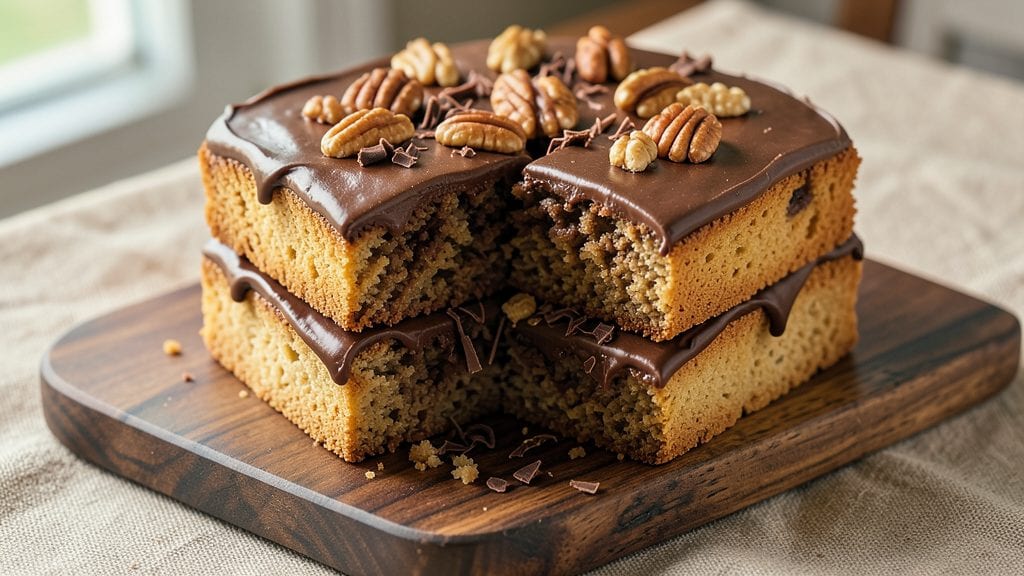
This Baker's German Chocolate Pound Cake delivers layers of rich cocoa and buttery texture that stay moist for days—no dry crumbs in sight. 💛 The secret lies in precise measurements and buttermilk, which creates that signature tender crumb while balancing the deep chocolate flavor.
I've perfected this version after years of testing, ensuring every slice has the perfect balance of dense yet tender layers.
The pound cake aspect means generous amounts of butter and sugar, creating a cake that's rich but never greasy. German chocolate lovers will appreciate the classic cocoa layers paired with coconut-pecan frosting that adds just the right sweetness and crunch.
This isn't your average cake—it's a showstopper that tastes like a bakery masterpiece.
What makes this recipe truly special is the buttermilk moisture technique, which keeps the cake tender without compromising structure. The layers stay distinct and flavorful, with each bite offering a perfect harmony of chocolate and coconut-pecan notes. This is the kind of cake that disappears quickly at gatherings.
Whether you're baking for a special occasion or treating yourself, this recipe delivers professional-quality results with simple steps. Let's get started on creating your perfect German chocolate pound cake!
Ingredients for baker's german chocolate pound cake
Rich cocoa, velvety butter, and toasted pecans—this cake delivers bakery-style decadence with every slice.
| Ingredient | Amount | Notes |
|---|---|---|
| Unsalted Butter 🧈 | 1 ½ cups | Cold, cubed for easier mixing |
| Granulated Sugar 🍚 | 2 ½ cups | Superfine preferred for smooth texture |
| Unsweetened Cocoa Powder 🍫 | ¾ cup | Natural or Dutch-processed |
| All-Purpose Flour 🌾 | 2 cups | Sifted for light batter |
| Baking Powder 🧂 | 2 tsp | Aluminum-free preferred |
| Salt 🧂 | ½ tsp | Fine sea salt |
| Buttermilk 🥛 | 1 ½ cups | Room temperature, full-fat |
| Large Eggs 🥚 | 4 whole | Room temperature, separated |
| Pure Vanilla Extract 🌿 | 2 tsp | Bourbon or Madagascar |
| Shredded Coconut 🥥 | 1 ½ cups | Unsweetened, toasted |
| Chopped Pecans 🌰 | 1 ½ cups | Toasted, roughly chopped |
| Coconut-Pecan Frosting 🍰 | 2 cups | Homemade or quality store-bought |
The butter here isn't just any butter—European-style unsalted makes all the difference. Plugrá or Land O'Lakes European-style are my go-tos, but any high-fat, cold butter works. Toast the pecans and coconut in a dry pan for 3-4 minutes until golden—this adds that nutty depth. The cocoa powder? Valrhona or Guittard if you're splurging, but Hershey's Special Dark works perfectly fine for home baking. Sift the flour and cocoa together to avoid lumps, and let your buttermilk and eggs sit out for 30 minutes before mixing—room temperature ingredients blend better.
No buttermilk? Mix 1.5 cups milk with 1.5 tbsp lemon juice or vinegar, let sit for 5 minutes. Short on vanilla? Vanilla bean paste adds specks of flavor magic. The frosting can be store-bought (look for Ghirardelli or Betty Crocker brands with real coconut), but homemade is worth it—just blend 1 cup softened butter, 3 cups powdered sugar, 1/2 cup toasted coconut, 1/2 cup chopped pecans, 2 tbsp milk, and 1 tsp vanilla. For extra moisture, brush the warm cake layers with simple syrup (1/2 cup sugar + 1/4 cup water) before frosting—trust me, it's a game-changer.
This cake stays moist for 5 days at room temperature wrapped in plastic, or 1 week in the fridge. Freeze layers separately for up to 3 months—thaw overnight in the fridge before frosting. The frosting keeps 1 week refrigerated, but add a thin layer of butter on top to prevent drying. Slice with a serrated knife for clean cuts, and serve slightly warm for that bakery-fresh experience. Leftovers? Reheat slices in the oven at 300°F for 5 minutes to restore that gooey texture.
Why You'll Love This Recipe
- Here’s what sold me: the cocoa and butter balance perfectly. No chalky aftertaste, just deep, velvety chocolate flavor that feels indulgent but isn’t overpowering. (Yes, even on a Tuesday night.)
- No-Fuss Mixing: I swear by this recipe because it’s one-bowl, no-fuss. Just cream butter and sugar until light, fold in the cocoa and flour—no extra steps, no mess. That rich chocolate base comes together faster than takeout.
- Rich Without Bitterness: Here’s what sold me: the cocoa and butter balance perfectly. No chalky aftertaste, just deep, velvety chocolate flavor that feels indulgent but isn’t overpowering. (Yes, even on a Tuesday night.)
- Leftovers That Last: This cake keeps beautifully for days—moist, not dry—so I bake one big batch and slice it for breakfasts, lunches, or dessert. Honestly, it’s my go-to for meal prep when I’m too busy to bake daily.
Step-by-step instructions for German chocolate pound cake
Here's how to create a decadent German chocolate pound cake with layers of rich cocoa and buttery moisture.
👨🍳 Step 1: Cream Butter and Sugar for Maximum Fluffiness
In a stand mixer fitted with the paddle attachment, beat the 1.5 cups unsalted butter (cold, cubed) with 2.5 cups granulated sugar on medium speed for 5-6 minutes. The mixture should become light, fluffy, and nearly double in volume with a pale, creamy texture. This thorough creaming incorporates air, which creates that signature tender crumb we're after.
I like to scrape down the sides of the bowl every 30 seconds to ensure even mixing. You'll see the sugar gradually dissolve and the butter become smooth—this is your signal that the base is properly emulsified. If you're using superfine sugar, the process will be even quicker, but don't rush this critical step.
👨🍳 Step 2: Add Eggs and Dry Ingredients for Perfect Texture
Add the 4 whole large eggs, one at a time, mixing on low speed after each addition until fully incorporated. Then add the 2 tsp pure vanilla extract and mix for 10 seconds. The batter should be thick and smooth, with ribbons forming when the paddle lifts.
In a separate bowl, whisk together the 2 cups all-purpose flour, 0.75 cup unsweetened cocoa powder, 2 tsp baking powder, and 0.5 tsp salt. Sift this dry mixture directly into the wet ingredients and mix on low speed for 20-25 seconds until just combined—you should still see a few flour streaks. Overmixing develops gluten, which would make our cake dense instead of tender.
👨🍳 Step 3: Incorporate Buttermilk and Nuts for Ultimate Moisture
Add the 1.5 cups buttermilk and mix on low speed for 30 seconds until fully incorporated. The batter will be thick and glossy, with a rich chocolate hue. Fold in the 1.5 cups shredded coconut and 1.5 cups chopped pecans using a silicone spatula, being careful not to overmix. These additions give the cake its signature texture contrast and nutty depth.
Here's the thing—don't worry if the batter looks too thick. German chocolate pound cake batter should be dense, almost like cookie dough. This thickness ensures maximum moisture retention during baking. The buttermilk is key here; it keeps the cake tender and prevents dryness.
🥘 Step 4: Bake in Layers for Perfect Rise and Texture
Preheat your oven to 350°F. Grease and flour three 9-inch round cake pans (or use nonstick spray). Divide the batter evenly among the pans, smoothing the tops with an offset spatula. Bake for 25-30 minutes, or until a toothpick inserted in the center comes out clean. Rotate the pans halfway through baking for even browning.
You'll know the cakes are perfectly done when the tops are set but still slightly springy to the touch. The edges should be golden brown, and you should see a slight pull from the sides of the pans. Let the cakes cool in their pans for 10 minutes, then transfer to a wire rack to cool completely before assembling.
🍽️ Step 5: Assemble with Frosting for Ultimate Decadence
Once completely cool, level the tops of the cakes if needed. Spread 1 cup coconut-pecan frosting between each layer, then frost the entire cake with the remaining 1 cup frosting. Press the remaining 1 cup shredded coconut and 1 cup chopped pecans onto the sides for that classic German chocolate look.
The frosting should be thick enough to hold the nuts in place but still spreadable. For extra decadence, I like to dip the bottom of the cake in melted chocolate before pressing on the final layer of nuts. Serve at room temperature for the best texture—this cake is moist enough to stay tender even when sliced, but the frosting needs time to set properly.
Pro Tips For Making Baker'S German Chocolate Pound Cake
- Sift the Cocoa: I learned this the hard way—lumpy cocoa powder makes a cake that tastes uneven. Use a fine-mesh sieve to sift the cocoa directly into the flour before mixing. This cuts out clumps and guarantees a smooth, rich texture. (Yes, even if you’re impatient like me.)
- Cream Butter Slowly: The butter-sugar mix should take about 3–4 minutes to lighten, not 10 seconds. Use a stand mixer on medium speed—rushing it traps air unevenly, leading to a dense cake. Stop when the mixture looks fluffy and holds soft peaks; this is your golden ticket for a tender crumb.
- Skip Overmixing Dry Ingredients: Once you fold in the flour-cocoa mix, stop after just combining. Overmixing develops gluten, which turns your cake into a tough brick. Use a spatula to gently fold until no dry streaks remain—that’s it. Your future self will thank you.
- Test Doneness with a Toothpick: The cake’s done when the toothpick comes out with moist crumbs, not wet batter. German chocolate cake is dense, so it takes longer than most—don’t pull it at 45 minutes just because the edges look set. Give it 5–10 minutes extra if needed. (Your patience pays off.)
Perfect pairings for baker's german chocolate pound cake
Creamy Coffee Pairings
German chocolate pound cake and coffee are a match made in heaven. I recommend a medium-roast dark chocolate coffee like Starbucks Sumatra or Peet's Major Dickason's Blend—the bitterness cuts through the sweetness beautifully.
For espresso lovers, a cortado (equal parts espresso and steamed milk) provides the perfect balance without overpowering the cake's richness. 💛
Warm Spiced Beverages
Warm drinks like chai latte or mulled apple cider elevate the experience, especially during colder months. I love adding a splash of vanilla syrup to my chai to complement the cake's vanilla notes.
For a boozy twist, try a spiked hot chocolate made with dark chocolate chips, a shot of Kahlúa, and a dash of cinnamon—it's like dessert in a mug.
Light Dessert Wines
If you prefer wine, go for Moscato d'Asti or Riesling—their light sweetness harmonizes with the cake's coconut and pecan flavors. A chilled glass of Gewürztraminer also works wonderfully, especially if you enjoy its floral and lychee notes. Serve the wine slightly chilled to enhance the cake's creamy texture.
Dairy Alternatives
For those avoiding dairy, coconut milk ice cream or almond milk-based coffee are fantastic options. I love pairing the cake with So Delicious Dairy-Free Coconut Milk Vanilla Ice Cream—it mirrors the cake's coconut flavor while keeping the pairing cohesive.
A vanilla chai latte made with Oatly Barista Blend also complements the cake beautifully.
Seasonal Fruit Pairings
Fresh fruit can add a refreshing contrast to the rich cake. In summer, strawberries or raspberries with a drizzle of dark chocolate sauce create a vibrant dessert platter. During winter, warm baked apples with a sprinkle of cinnamon and a dollop of whipped cream provide a cozy complement.
Serve the fruit on the side or as a garnish on top of cake slices.
Boozy Liquor Pairings
For an adult twist, pair the cake with bourbon or Irish cream—the caramel and vanilla notes in Woodford Reserve or Baileys enhance the cake's flavors. A dark rum float made with Kahlúa and vanilla ice cream also works wonderfully.
Serve the cake slightly warm to let the alcohol's warmth meld with the frosting's richness. 🍸
Nutrition facts
Frequently asked questions about German chocolate pound cake
Why does this recipe use buttermilk instead of regular milk?
The buttermilk creates a tender, moist crumb that stays fresh for days. The acidity in buttermilk reacts with the baking powder, producing more lift while keeping the cake dense and rich. Regular milk won't give you that signature buttery moisture—this is the secret to a truly bakery-style pound cake!
Can I make this cake in a different pan size?
Yes! For a single 9-inch layer, reduce the batter by 1/3 and bake for 35-40 minutes. For a 10-inch pan, increase baking time by 5-7 minutes. Always check doneness with a toothpick—it should come out clean. The key is maintaining the same batter-to-pan ratio for even baking.
What's the best way to store leftovers?
Wrap the frosted cake tightly in plastic wrap and store at room temperature for 3 days, or refrigerate for up to 5 days. For longer storage, freeze unfrosted layers in airtight containers for 3 months. To refresh, let it sit at room temperature for 1 hour before serving—this restores the perfect texture.
Can I substitute the pecans or coconut?
You can swap pecans for walnuts or almonds, but the flavor will change slightly. For coconut, try toasted desiccated coconut or even crushed pineapple (drained well) for a tropical twist. Just remember—these ingredients add both texture and moisture, so omitting them will make the cake denser.
Why did my cake turn out dry?
Dry cake usually means overbaking or under-creaming the butter and sugar. Always bake until a toothpick comes out with moist crumbs, not clean. For extra moisture, brush warm layers with simple syrup (equal parts sugar and water)** before frosting. Also ensure your butter was cold when creaming—room temperature butter creates a different texture.