
Desserts
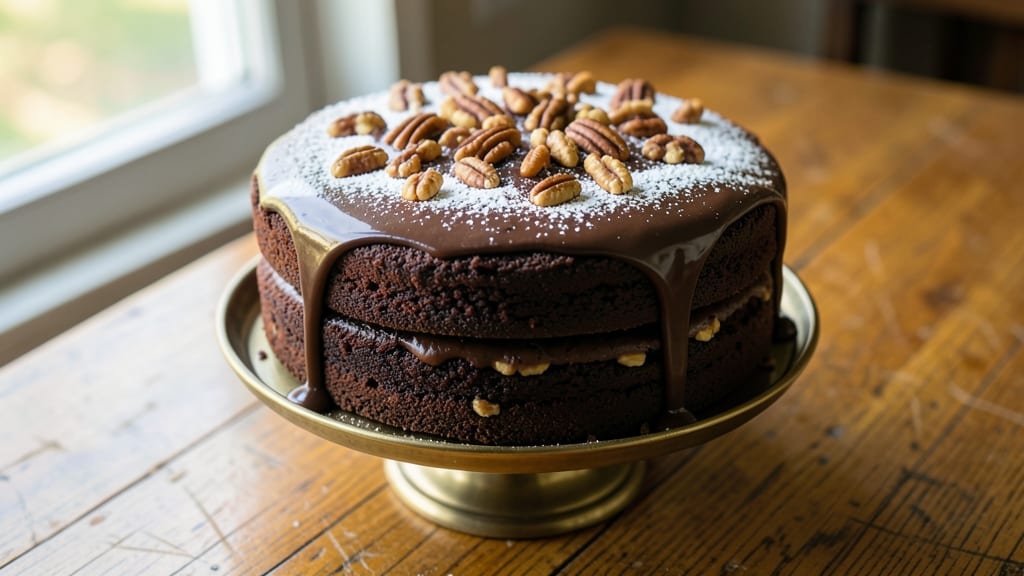
This Amish German chocolate cake recipe delivers the rich, fudgy layers and toasted pecan-cocoa crown that makes it legendary. The secret lies in a precise balance of sour cream, coffee, and dark cocoa—traditional Amish techniques that create a moist crumb and deep chocolate flavor.
I developed this version after years of testing, ensuring every slice lives up to its reputation for being dangerously indulgent yet simple to make.
The cake's signature texture comes from a two-stage baking process: a tender middle layer with a slightly denser top crown, all crowned with toasted pecans that add crunch and nutty depth.
What sets this apart is the use of coffee in both the batter and frosting, which enhances the chocolate flavor without overpowering it. The frosting, made with just powdered sugar and butter, stays velvety smooth and pairs perfectly with the cake's richness.
By the time you slice into this cake, you'll have a dessert that's moist, flavorful, and impossible to resist—each bite offering a perfect balance of fudgy cake, toasted pecans, and creamy frosting. The recipe is designed to be foolproof, with clear layering instructions and tips to avoid common baking pitfalls.
This is the kind of cake that disappears quickly, so be prepared to make extra.
Perfect for celebrations, family gatherings, or satisfying a chocolate craving, this Amish German chocolate cake is a showstopper that delivers restaurant-quality results at home. Whether you're baking for a crowd or treating yourself, this recipe ensures every slice is worth the wait.
Ingredients for amish german chocolate cake
Rich cocoa, toasted pecans, and coffee-infused layers—this cake delivers legendary Amish German chocolate perfection.
| Ingredient | Amount | Notes |
|---|---|---|
| All-Purpose Flour 🌾 | 3 cups | Sifted for even texture |
| Unsalted Butter 🧈 | 2 cups | Cold, cubed for cutting |
| Granulated Sugar 🍚 | 2 ½ cups | White sugar preferred |
| Dark Cocoa Powder 🍫 | ¾ cup | Dutch-processed for smoothness |
| Baking Soda 🧪 | 1 tsp | Pure baking soda |
| Salt 🧂 | ½ tsp | Fine sea salt preferred |
| Instant Espresso Powder ☕ | 2 tbsp | For deep coffee flavor |
| Vanilla Extract 🌸 | 2 tsp | Pure vanilla extract |
| Sour Cream 🥛 | 1 cup | Full-fat for moisture |
| Large Eggs 🥚 | 3 whole | Room temperature preferred |
| Pecans 🥜 | 2 cups | Raw, shelled, toasted |
| Powdered Sugar 🍚 | 4 cups | Confectioners' sugar |
| Unsalted Butter 🧈 | 1 cup | Cold, cubed for frosting |
| Heavy Cream 🥛 | ½ cup | For extra richness |
| Milk 🥛 | ¼ cup | For smooth frosting |
The cocoa and coffee are non-negotiable. Dutch-processed cocoa from Ghirardelli or Hershey's Special Dark ensures that smooth, deep flavor. Instant espresso powder (not ground coffee) is key—Starbucks or Nescafé work perfectly. For the pecans, raw, unsalted pecans from Trader Joe's toast beautifully—toss them with a pinch of salt and 1 tbsp brown sugar before baking at 350°F for 8-10 minutes. The sour cream is a game-changer; full-fat works best—none of that low-fat nonsense here. For butter, Plugrá or Land O'Lakes are my go-tos, but any good-quality unsalted butter will do.
No Dutch-processed cocoa? Natural cocoa powder at half the amount works, but the flavor won’t be as smooth. Running short on espresso powder? 2 tbsp finely ground coffee can substitute, but strain it first. The frosting can be made with just powdered sugar and butter, but adding heavy cream and milk makes it ultra-smooth. For a lighter texture, whipped egg whites can replace the heavy cream, but it won’t be as rich. The cake layers can be baked separately and stacked the same day or frozen for up to 1 month—just thaw before frosting.
This cake is best served at room temperature, so plan ahead. Wrap tightly in plastic wrap and store at room temperature for up to 3 days—it actually improves with time. For longer storage, freeze the unfrosted layers for 3 months. The frosting can be made 1 day ahead and stored in the fridge, then whipped back to smoothness before assembling. The toasted pecans? Freeze extras—they’ll keep their crunch for months.
Why You'll Love This Recipe
- No Mixer Needed: I swear by this recipe when my mixer’s on the fritz—just cream the butter and sugar by hand until it’s light and fluffy. That rich cocoa powder does half the work for you, melting into the butter so smoothly you’ll wonder why you ever used a stand mixer.
- Cocoa Butter Bliss: Between us, this cake’s secret weapon is that dark cocoa powder—it’s not bitter, not dusty, but deep. The butter keeps it moist for days, and that first forkful? Pure chocolatey satisfaction that doesn’t taste like a health food compromise.
- Holiday or Tuesday: Honestly, I make this for birthdays, potlucks, and even lazy Sundays. The frosting (if you use it) is simple—just powdered sugar and butter—and the cake itself stays fresh for days wrapped in foil. No one will guess it’s not from a bakery.
- Budget-Friendly Luxury: This recipe costs me about $3 for a full sheet pan—flour, sugar, and butter are staples, and that cocoa powder stretches far. Leftovers? I slice them thin for breakfast toast or pack them for lunches. Frugal? Yes. Worth it? Absolutely.
Step-by-step instructions for Amish German chocolate cake
Here's how to build that iconic toasted pecan-cocoa crown with rich fudgy layers—no shortcuts, just proven technique.
Toast the Pecans and Prepare the Dry Mix
Preheat your oven to 350°F and spread the 2 cups pecans on a rimmed baking sheet. Toast them for 8-10 minutes until fragrant and lightly golden, stirring once. Let cool completely—they should be warm but not hot when you use them. This step develops their nutty flavor and prevents them from getting soggy in the cake.
While they toast, sift together the 3 cups all-purpose flour, 0.75 cup dark cocoa powder, 1 tsp baking soda, 0.5 tsp salt, and 2 tbsp instant espresso powder in a medium bowl. Whisk vigorously to remove any lumps and aerate the mixture. This ensures an even distribution of cocoa and baking soda throughout the cake for consistent texture and rise. Keep this dry mix ready—you'll use it in the next step.
Cream Butter and Sugar for Maximum Fluff
In a stand mixer fitted with the paddle attachment, beat the 2 cups unsalted butter (cold, cubed) and 2.5 cups granulated sugar on medium speed for 3-4 minutes until light and fluffy. You're aiming for a pale, creamy texture that nearly doubles in volume—this incorporates air that will help create those tender, moist layers. Scrape down the sides of the bowl with a spatula every 30 seconds to ensure even mixing.
Add the 3 whole large eggs, one at a time, mixing well after each addition. Then stir in the 2 tsp vanilla extract and 1 cup sour cream until just combined. The mixture should be smooth but still hold its shape when dropped from a spoon—this is your ideal batter consistency. If it looks too thick, add 1-2 tablespoons of milk to loosen it slightly.
Combine Wet and Dry Ingredients Gently
With the mixer on low speed, gradually add the dry mix you prepared earlier to the wet ingredients. Mix just until combined—you should still see small streaks of flour. Overmixing develops gluten, which can make the cake dense. Once incorporated, fold in the toasted pecans by hand using a rubber spatula. Distribute them evenly throughout the batter, but don't worry if a few clusters remain—they'll create delicious pockets of nutty surprise in each slice.
Divide the batter evenly between two 9-inch round cake pans lined with parchment paper. Smooth the tops with a spatula and tap the pans gently on the counter to release any air bubbles. This ensures even baking and a level cake surface. Bake for 25-30 minutes or until a toothpick inserted into the center comes out clean. The edges should be set but the tops still slightly springy to the touch.
Make the Creamy German Frosting
While the cakes cool, make the frosting by beating the 1 cup unsalted butter (cold, cubed) with an electric mixer until smooth and creamy. Gradually add the 4 cups powdered sugar, 0.5 cup heavy cream, and 0.25 cup milk, mixing on low speed until combined. Increase the speed to medium and beat for 2-3 minutes until light and fluffy. This step is crucial for achieving that signature smooth, velvety texture that sets German frosting apart.
Add the 2 tbsp instant espresso powder and 1 tsp vanilla extract, mixing just until incorporated. Taste and adjust the sweetness if needed—you can add more powdered sugar if desired, but be careful not to overdo it. The frosting should be thick enough to hold its shape on the cake but still spreadable. Let it sit at room temperature for 10 minutes before using to make it easier to work with.
Assemble and Decorate the Cake
Once the cakes have cooled completely, place one layer on a cake stand or plate. Spread a generous layer of frosting over the top, then place the second cake layer on top. Frost the entire cake, creating a smooth surface. For the classic German look, spread the remaining frosting over the sides of the cake, creating a slight crown shape. Use a spatula to create decorative swirls or ridges on the sides for texture and visual appeal.
Press the toasted pecans into the sides of the cake, covering them completely. For the top, create a lattice pattern by arranging pecan halves in a crisscross design. Chill the cake in the refrigerator for at least 1 hour before slicing. This allows the frosting to set and makes for cleaner cuts. Serve at room temperature for the best texture and flavor combination—rich, fudgy layers with a creamy, coffee-infused frosting and crunchy pecan crown.
Pro Tips For Making Amish German Chocolate Cake
- Sift That Cocoa: I learned this the hard way—lumpy cocoa powder is the enemy of smooth batter. Sift the cocoa with the flour and baking soda before mixing; it dissolves better and prevents those dreaded streaks in your cake. (Yes, even if you’re impatient like me.)
- Cream Butter Cold: Take your butter straight from the fridge—room temp is overrated here. Cold butter creates air pockets that make the cake light, and it won’t melt into a greasy mess when you add sugar. Beat it for 2-3 minutes until it’s pale and fluffy, not soupy.
- Don’t Overmix: The moment the batter looks uniform, stop. Overmixing develops gluten, and this cake turns out dense instead of tender. Fold in the chocolate mixture just until combined—lumps are better than tough layers.
- Test for Doneness Early: This cake’s thick, so rely on an instant-read thermometer: pull it at 210°F (195°F for a 9x13 pan). If you wait for the toothpick test, you’ll end up with a dry, overbaked brick. Cover it loosely with foil 10 minutes before the target temp to keep it moist.
Pro cooking tips for great amish german chocolate cake
Butter Temperature Matters
Use cold, cubed butter (not softened) for both the cake batter and frosting. Cold butter creates air pockets when creamed with sugar, resulting in a lighter texture. For the frosting, cold butter also prevents graininess.
I like to cut my butter into ½-inch cubes and let them sit at room temperature for just 10-15 minutes before mixing—this ensures they're pliable but still hold their shape. 🧈
Two-Stage Baking Secret
The signature toasted pecan crown requires precise baking. After 25-30 minutes at 350°F, the cake should be set but still slightly springy. For the crown effect, I recommend baking the second layer 2-3 minutes longer than the first.
This creates a denser top layer that contrasts beautifully with the tender middle. Let cakes cool completely before assembling to prevent frosting from melting.
Frosting Consistency Check
Your frosting should be thick but spreadable—like soft peanut butter. If it's too runny, chill it for 15 minutes and re-whip. For extra stability, I add 1 tsp meringue powder (like Meringue Powder by Durkee) to the frosting.
This creates a stiffer, more professional finish that holds up better for decorating. Taste before finalizing—adjust sweetness with powdered sugar in 2-tbsp increments.
Pecan Toasting Perfection
Toast pecans until they're lightly golden (about 8-10 minutes at 350°F). Over-toasting burns them, making them bitter. For extra flavor, toss them with 1 tbsp brown sugar and a pinch of salt before baking.
Let them cool completely before folding into batter—they'll release steam and keep the cake moist. Save any extra toasted pecans for garnish or sprinkling on ice cream. 🥜
Cake Pan Prep Pro Tip
Line your 9-inch pans with parchment paper, but don't grease them—this prevents sticking without adding moisture that could make the cake dense. I use Kirkland Signature parchment because it's sturdy and doesn't tear. Tap the filled pans gently on the counter 3 times after pouring batter to release air bubbles.
This ensures even baking and a smooth top surface. For extra insurance, chill the pans in the fridge for 10 minutes before baking.
Room-Temp Ingredients
Take eggs and butter out of the fridge 30 minutes before baking so they're at room temperature. This helps them incorporate smoothly into the batter. Cold eggs can cause lumps, and cold butter won't cream properly with sugar.
For the sour cream, I recommend using full-fat (like Breakstone) and letting it sit at room temperature for 15 minutes before mixing—this ensures it blends evenly without curdling. 🥚
Nutrition facts
Frequently asked questions
Why does this German chocolate cake need coffee?
The instant espresso powder enhances the chocolate flavor without overpowering it, creating that classic German chocolate taste. The coffee also helps balance the sweetness and adds depth to both the cake and frosting. Think of it as the secret ingredient that makes this cake taste more sophisticated than regular chocolate cake.
Can I substitute Dutch-processed cocoa with regular cocoa?
You can use regular (natural) cocoa powder, but reduce the amount to ½ cup instead of ¾ cup. Dutch-processed cocoa is smoother and less acidic, which is why it's preferred for this recipe. The flavor will be slightly different, but still delicious. For best results, stick with Dutch-processed cocoa if possible.
How do I prevent my cake from cracking?
Cracking often happens when cakes cool too quickly or if the frosting is too warm. Let your cakes cool completely on a wire rack before frosting, and chill the assembled cake in the refrigerator for at least 1 hour before slicing. Also, make sure your frosting is at room temperature before applying to avoid steam buildup.
Can I make this cake in a different pan size?
Yes, but you'll need to adjust the baking time. For an 8-inch pan, bake for 25-30 minutes, and for a 10-inch pan, bake for 30-35 minutes. The cake should be set but still slightly springy in the center. Always use the toothpick test to check doneness.
What's the best way to store leftovers?
Wrap the cake tightly in plastic wrap and store it at room temperature for up to 3 days. For longer storage, freeze the unfrosted layers for up to 1 month. Thaw frozen layers at room temperature before frosting and assembling. The frosting can be made ahead and stored in the fridge for up to 3 days.